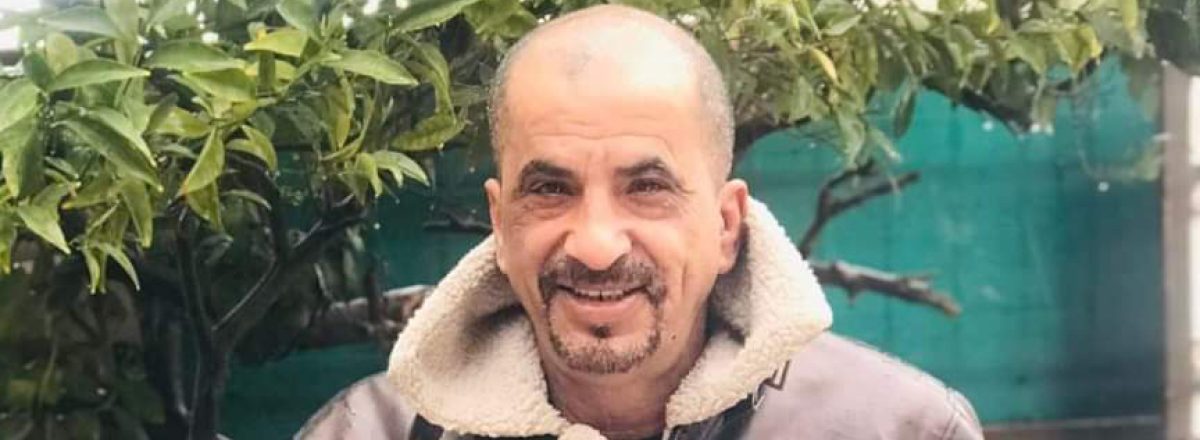
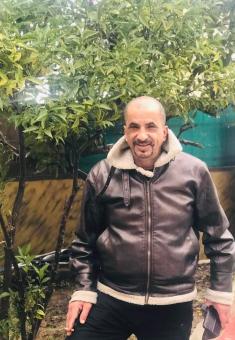
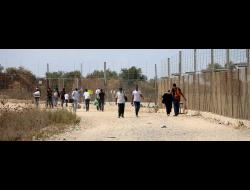
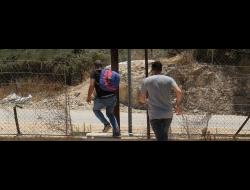
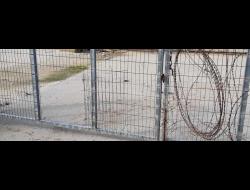
Nabil Ghanem (53) lived in Sara, a village west of the city of Nablus. On Sunday, 19 June 2022, at around 10:00 A.M., he tried to cross through one of the gaps in the Separation Barrier near the Qalqiliyah DCO (Eyal) Checkpoint in order to enter Israel, where he worked without a permit, and collect money his employer owed him. As soon as he crossed the barbed wire fence on the eastern side of the barrier, Israeli soldiers who were lying in wait fired several shots at him and at other Palestinian workers who were with him. Ghanem was injured in the torso and was evacuated by soldiers to Meir Hospital in Kfar Saba, Israel, where he died of his wounds a short while later. Israel justified the shooting on the grounds that Ghanem had vandalized the barrier and tried to cross into Israel, and held the body until 23 June 2022. After Ghanem was killed, Israel revoked the work permits of two members of his family.
Ghanem is the second Palestinian worker killed by soldiers while trying to cross the Separation Barrier into Israel in the last two months. On 8 May 2022, soldiers killed Mahmoud ‘Aram (27), a resident of Khan Yunis who lived in ‘Aqbat Jaber Refugee Camp in recent years, after, according to the military, he tried to cross the barrier near Far’on. He died of his wounds later that day at Sheba Hospital in Tel Hashomer, Israel. In his case, too, Israel held the body and only gave it back to the family on 11 May 2022.
Over the course of four months, from April to July 2022, Israel implemented a lenient open fire policy by the Separation Barrier, permitting live fire at the lower body of Palestinians crossing – or trying to cross – it. The policy change, officially a response to several terrorist attacks by Palestinians who entered Israel via gaps in the barrier, increased the number of Palestinians wounded or killed by live fire in this period. According to media reports, in addition to Ghanem and ‘Aram, Israeli gunfire injured 15 Palestinians in April alone. In comparison, according to UN figures,* one Palestinian was wounded by gunfire near the barrier in the first quarter of 2022.
B’Tselem has previously documented periods in which soldiers used live fire against Palestinians crossing or trying to cross through gaps in the Separation Barrier. Israel appears to periodically decide, for its own reasons, whether to allow thousands of Palestinian workers to cross through these gaps or try and stop them. The latter is enforced, among other things, by live fire.
As B’Tselem has previouslystated, whatever grounds Israel cites, opening live fire against Palestinians seeking to enter Israel through gap in the barrier – almost all of them laborers looking to work in Israel – is unlawful and cannot be justified. The soldiers are not operating on their own initiative, or at the behest of commanders on the ground; they are implementing a declared policy approved by senior officials. It follows, therefore, that no one is held accountable for the injuries and the killings, and that the MPIU investigation launched, according to media reports, after the killing of Ghanem will also result in whitewashing.
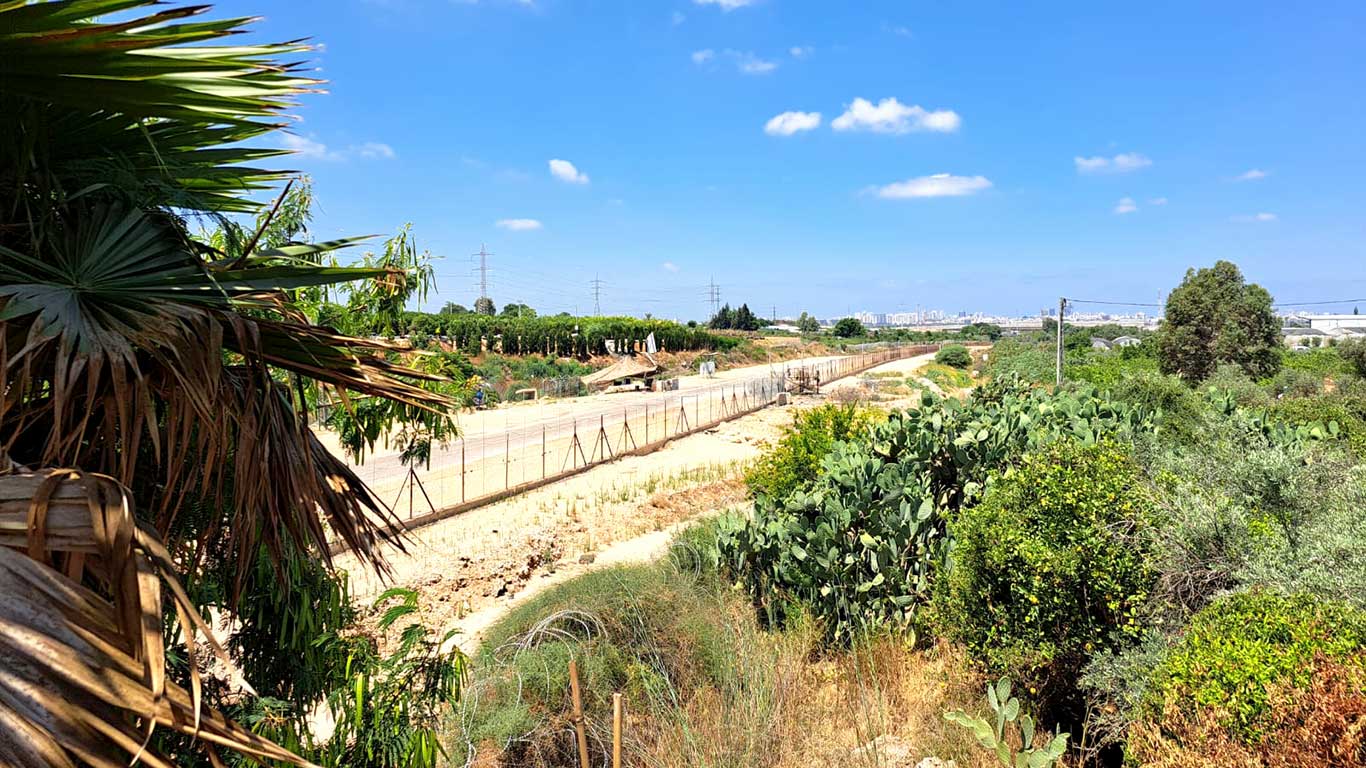
The Separation Barrier in the area where soldiers fatally shot Nabil Ghanem. Photo by Abdulkarim Sadi, B’Tselem, 6 July 2022
Y.‘A. (54), a resident of Sara, met Nabil Ghanem and his son at Qalqiliyah Checkpoint and set out with them to find a way to cross the barrier. In a testimony he gave B’Tselem field researcher Salma a-Deb’i on 2 July 2022, he recounted:
On Sunday, before dawn, I met Nabil Ghanem and his son Mu’tasem at Qalqiliyah Checkpoint. We sat outside one of the businesses there and waited to cross through one of the gaps in the fence near the checkpoint. We stayed there until the sun rose. Another young man from our village, M.R., joined us, as well as two other young men who I don’t know where they live. One of them said he knew a gap in the fence. We got in a car that drove us there, and asked the driver to wait for us. We noticed soldiers lying in wait near the gap and heard shots. Nabil said it was dangerous and refused to cross there. We went back to the car and drove back to the checkpoint.
We talked with fixers who know the gaps and take workers through them. Some people, including Mu’tasem, went and tried to cross through one of the gaps, but after about half an hour, they came back and said there were soldiers and shooting there. Mu’tasem said he wanted to go home because it had been dangerous since the morning. We drank coffee and some of us had breakfast. M.R. suggested we go back to the gap because maybe the soldiers were gone. We went and tried to cross through farmland near the fence, but we heard young guys saying: “Soldiers, soldiers,” so we turned back because we were afraid the soldiers would catch us.
Nabil and another young man I don’t know really wanted to go through, and kept walking around the area to find an opening to cross. I heard one of the young guys say there was a way through if anyone wanted. I told them not to go because it was dangerous, but Nabil didn’t listen to me. The young guy trod on the barbed wire fence. He was about 20 meters away from me. M.R. and Nabil and two other young men went over to him. I saw the young guy who was treading on the barbed wire go through and so did Nabil. Then I heard three or four shots, I’m not sure how many. I immediately turned and ran away. While I was running, I heard someone say, “Oh, I’m dying.” I was afraid the soldiers would chase us and catch us or shoot at us. Some young men told me how to get to the main road, and from there I got in a car and went home.
On the way home, I saw on social media that one of the workers trying to cross the fence had been injured. I realized it was Nabil. I was shocked. I’ve had coffee with him more times than with my own family. For years, we slept in Israel together for weeks at a time. I later learned he’d been killed.
M.R. (21), single, a resident of Sara, cannot obtain a permit to work in Israel as he does not meet the criteria set by Israel. Instead, he enters through gaps in the barrier.
In a testimony he gave B'Tselem field researcher Salma a-Deb'i on 20 June 2022, M.R. described what happened that morning:
At around 10:00 A.M., one of the young men went to the fence and trod on it in order to cross through to the other side. After he got through, he called out to us to cross too. We went towards him. A resident of my village, Nabil Ghanem, was walking ahead of me. He put his foot on the fence, and then I heard four shots. I saw three soldiers hiding in a low place behind the fence, seven to ten meters away from us. I had no choice but to run away. I turned and ran without stopping until I got away.
I didn't know what happened to Nabil. Everyone who was with me ran away. I decided to go home. I was very scared by what happened. After about an hour, I called drivers in the area. They told me they’d seen an ambulance and that there was probably a wounded person. I later found out through social media that Nabil had been killed. The next day, I had to go to the fence again. I can't stay without work. My employer owes me money and if I don't go to him, I won't get it. This is our life. We have no other choices.
Nabil's son, Mu'tasem Ghanem (23), a plasterer, set out with his father from home before dawn towards the Separation Barrier. They reached the checkpoint at around 5:00 A.M. In a testimony he gave B'Tselem field researcher Salma a-Deb'i on 27 June 2022, he recounted:
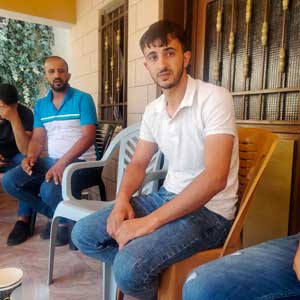
Mu’tasem Ghanem and his brothers. Photo by Salma a-Deb’i, B’Tselem, 6 July 2022
The drivers in the area told us there was a gap in the fence in an area called Abu al-‘Adas. We drove there. There were other workers there trying to enter Israel. When we were 200 meters from the fence, I heard shots but didn't know what was happening exactly. We went back to the car and drove back to the checkpoint. We had breakfast there. My dad had schnitzel and I had falafel. We waited until about 6:30 A.M., and then I went to check other gaps near the checkpoint, but they all had soldiers nearby. I called my dad and told him we couldn't go through. He asked me to come back to him. When I got there, the bus to Qalqiliyah was just passing and my father signaled it to stop and told me to go. I asked him to come with me, but he wanted to stay and try to cross the fence anyway. He wanted to go to his employer to get his salary, so he could give money to my brother Mu'taz (31) and help him buy an apartment. I got on the bus and went back home.
At 8:30 A.M., my dad called and asked if I was home. I said I was, and he said he was still waiting to cross. I asked him to come home, and he said he'd cross the fence soon. We hung up and I went back to sleep. I woke up at 11:00 A.M. and called him, but he didn't pick up. His phone was off. I was worried, because he’s only never answered when he’s been arrested. I called M.R., whom I met in the morning by fence, and he told me he’d seen Dad go through the gap in the fence, and then heard gunfire and ran away. He later found out an ambulance had come and he thought the soldiers had arrested my dad.
I didn't believe him. I went out of the room and found my mother, my sisters and my brother Mu'taz crying. I asked them what happened, and they said dad had been injured. I told them it didn't make sense. Even an hour later, when news of his death was shared on social media, everyone was crying and I still didn't believe it. I said he’d been arrested and nothing had happened to him. Very quickly, relatives, friends and neighbors started arriving. I started to grasp that he was dead.
In addition to our mourning over Dad, Israel refused to hand over his body. The Palestinian DCO told us the body was being held because Dad was a terrorist and wanted to cut the fence. Only on Wednesday evening did the Israeli DCO hand over the body, at Huwarah Checkpoint. Dad wasn't a terrorist. He worked in Israel for 35 years without a permit, and always crossed through the gaps in the fence to support us. He was arrested many times in Israel because he didn't have a work permit. His last arrest was in 2018, when he spent two months in prison. Yet he still returned to work in Israel every time. We have no other choice. There's no work in the West Bank, and whatever there is, is irregular and badly paid. We just want to work and earn a living, like everyone else.
* According to the database on the protection of civilians of the UN Office for the Coordination of Humanitarian Affairs (OCHA).
Updates: On 1 July 2022, media reports stated that an MPIU investigation had been launched.
Israel’s regime of apartheid and occupation is inextricably bound up in human rights violations. B’Tselem strives to end this regime, as that is the only way forward to a future in which human rights, democracy, liberty and equality are ensured to all people, both Palestinian and Israeli, living between the Jordan River and the Mediterranean Sea.
Since the Hamas attack on 7 October 2023, Israel has acted in a coordinated and deliberate manner to destroy Palestinian society in the Gaza Strip, committing genocide against its residents. In light of Israel’s actions in Gaza, the public statements made by Israeli decision-makers, and the international community’s failure to take effective action, there is a serious risk that the Israeli regime will expand the genocide to other areas under its control—first and foremost, the West Bank.
B’Tselem calls on the Israeli public and the international community to use every tool available under international law to bring an immediate end to Israel’s genocide against the Palestinian people.