A 41-year-old father of seven, Rasem described being displaced, rescuing a baby from the bombing of an IDP camp, wandering with his family and returning to the devastated Jabalya
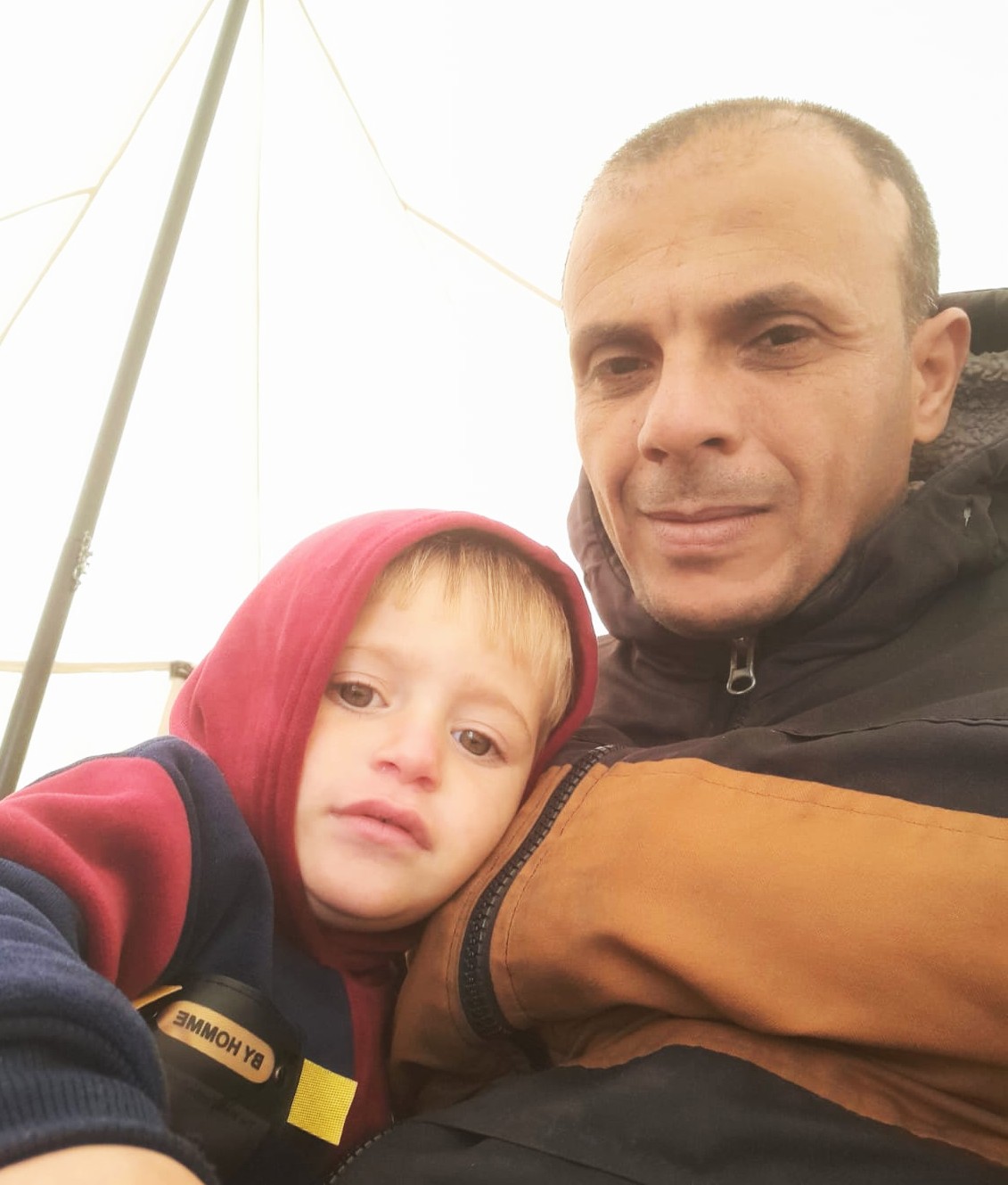
Before the war, I worked as a taxi driver and lived in a rented apartment in the town of Jabalya town with my wife, Fawakah, 35, and our children: Muhammad, 20, Islam, 18, Amneh, 16, Maryam, 11, Nur al-Huda, 10, Mustafa, 8, and ‘Abdallah, 5.
On 7 October 2023, we abandoned our home because there was heavy bombing nearby and a shell fell right next to our house. We were terrified, so we moved to my parents' house in the al-Falujah area, which is also in Jabalya.
There were also heavy bombings in Jabalya that forced us to evacuate several times within the town. Our final station in Jabalya was the a-Rafa’i school, where we arrived in December 2023. There were crowds of displaced people there. We stayed for about ten days and then, on 28 December, the Israeli military bombed the school and two classrooms where people were staying were hit. I went into one of the classrooms and saw about eight dead bodies, body parts, injured people and a lot of blood. Suddenly, I heard crying and saw a little baby, just a few months old. I picked him up and left the classroom. I saw people running in panic and screaming. I didn’t know if his parents were killed or injured. I stood there waiting for someone to come to me, but everyone rushed out of the classroom and passed me by, and no one came up to me.
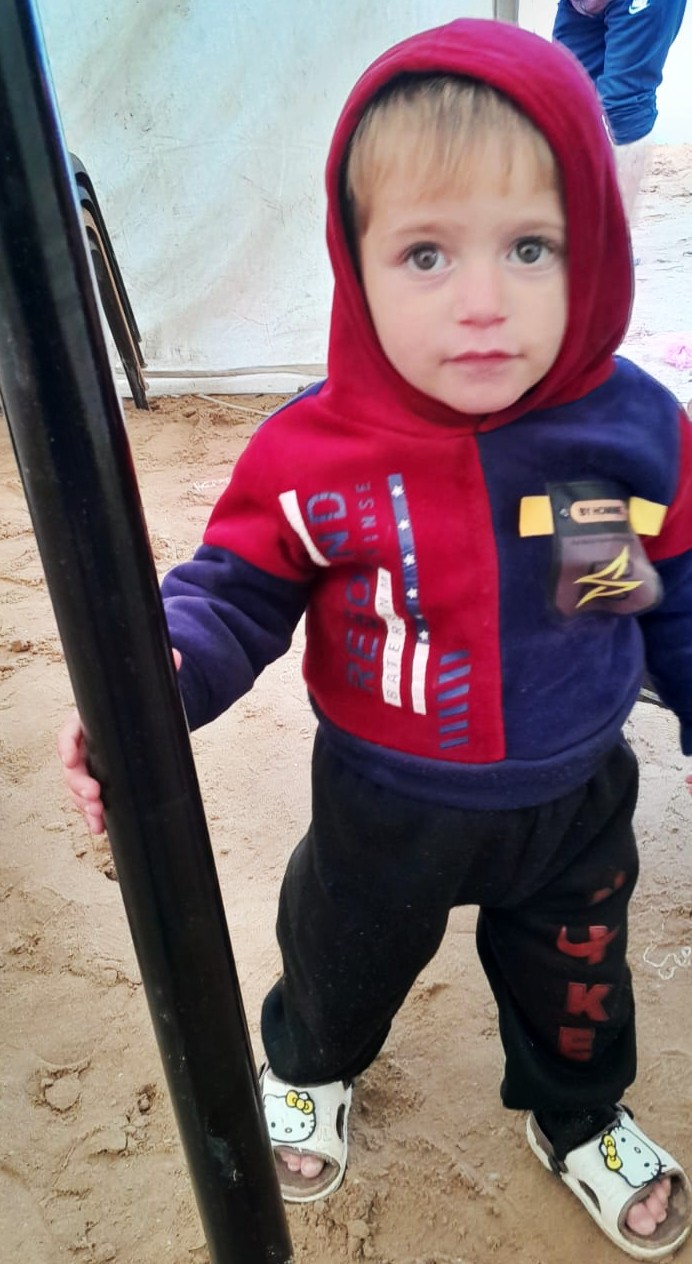
The military ordered everyone at the school to evacuate and go to the southern part of the Gaza Strip immediately. My family and I left the school, taking the unknown baby with us. I decided to call him Hamudah (a common nickname for Muhammad).
We walked along Salah a-Din Street to the checkpoint the military set up at Netzarim, but because there were heavy bombings and shootings in the area, we couldn’t get through. We had to turn back, and we found shelter in a school in the a-Zeitoun neighborhood near the checkpoint. We stayed there that night. In the morning, we set off again on the journey of displacement and walked with the baby toward the checkpoint.
We reached Deir al-Balah in the center of the Strip and stayed there for about 40 days. From there, we moved to a school in Khan Yunis, but there were masses of displaced people and it was very crowded, so we only stayed for two days.
After that, we moved to the Tel a-Sultan area in Rafah. We walked because we didn’t have money for transportation, and our situation was difficult: it was hard to get food, and sometimes we couldn’t find any bread at all. Despite everything, I worked hard to get formula and diapers for baby Hamudah, because he was now in our care.
In Rafah, I found work selling plastic sheets, and with that, I was able to buy food for my family and milk for Hamudah. My wife took care of him. We adopted him as part of our family and for my children, he became a little brother to pamper. People approached us and asked if they could adopt Hamudah, but we refused because my wife and I had already taken upon ourselves to care for him. We loved Hamudah very much, like one of our own children.
Then the military ordered us to evacuate from Rafah, and we moved to a school in Khan Yunis that had become a displacement camp. At the school, people again asked us to let them adopt Hamudah, but we refused because we loved him and saw him growing right before our eyes. He was one of the few good things that happened to us during that time. He grew, developed and started walking.
I was always looking for work so that I could buy formula for him. I worked in agriculture in a field near the school.
I never felt for a moment that Hamudah was a burden. I was very happy to meet his needs, and I believed he brought us blessings because, thanks to him, doors for earning a livelihood opened up for us. I told my wife and children that Hamudah was already a part of our family and an inseparable piece of my heart. We protected him and kept him safe from anything. At the same time, we did want to find his family, so we asked people and tried to locate them.
More than a year after we took Hamudah in, the ceasefire was declared and people started returning to the north, to Gaza City and also to Jabalya. My family and I were very happy and excited to return after a year of displacement, wandering and suffering. I also had hope that we would find Hamudah’s family. I thought about how, when we got back to Jabalya, we would meet our family and we would all hug each other, and who would be there to wait for the baby and hug him? How sad would it be if he stayed an orphan, without a family?
On the way back, near Jablat a-Nuweiri, west of a-Nuseirat Refugee Camp (a-Rashid Street), we met a reporter from Al Arabiya who broadcast our return north live on air. Hamudah was in my arms and I told her his story. After the interview, we continued walking north. I didn’t know that the interview was shared on social media, and that people started asking about me and the baby.
In the end, thanks to that interview, Hamudah’s real father found us. He called the reporter who interviewed me and she called me. Later, we met with Hamudah’s father. His name is Tareq Abu Jabal, so the baby’s name is now Muhammad Abu Jabal. We learned his mother had been killed. It was very difficult for us to hand Muhammad over to his father. We had mixed feelings. On the one hand, we were so happy he found his father, but on the other hand, we didn’t want to say goodbye. I handed him over crying. Muhammad was already used to calling me “Daddy,” and he didn’t want to go with his father either. He looked at me with sadness. Since then, my wife has been crying all the time, and the kids miss him too. He was already part of our family. Muhammad was the most beautiful thing that happened to us in this war. I always imagine him in my thoughts, and my wife and children think about him all the time.
Now, we live in a tent in the north of the Strip. There’s nothing here but piles of stones and sand. It’s a wasteland. I was in shock when I saw the situation here. The area is no longer fit for human habitation, not even for animals.
There is no infrastructure for human existence. There’s no nourishing or healthy food, no water, no electricity, no medicine, no transportation, no first aid services for the sick, no fuel, no gas for cooking, and no streets or roads. There are no schools or hospitals, either. Only total destruction and devastation that words cannot describe. I’m mentally broken. Sad and depressed.
Right now, my biggest goal is to get a gas cylinder for cooking, which costs a lot of money. They’re also selling solar panels for electricity, but they’re very expensive: about 6,000 shekels (~1,600 USD) for a panel and another 5,000 shekels for a battery.
* Testimony given to B’Tselem field researcher Olfat al-Kurd on 17 February 2025