A 32-year-old from Gaza City, Hazem lost his wife and four-month-old baby when a relative’s home was bombed
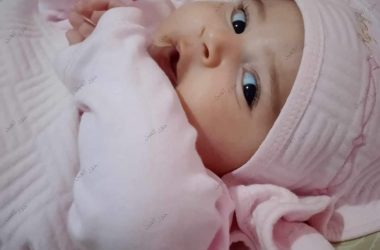
Until the war I lived with my wife, Rawan ‘Abd al-Wahed, 25, and our daughter Hur, 4 months, on al-Mukhabarat Street in Gaza City. On 13 October 2023, we left the house after the military ordered the area evacuated. My two brothers, Mazen, 42, and Muhammad, 36, came too with their families, as well as my mother, Sanaa al-Madhun, 65, who has lung cancer. We went to stay with my maternal aunt, Safaa al-Madhun, 62, in the Hamad area in the city of Khan Yunis.
There was heavy bombing everywhere, and we heard shelling from tanks and warships all the time. There was no electricity or water, no internet connection and no public transport. The conditions were too awful to describe.
On 15 November, my mother had an appointment at the Abu Yusef a-Najar Hospital in Rafah, and I went there with her. That day, my wife took Hur to visit her family in a-Nuseirat Refugee Camp after not seeing them for a long time. She was also hoping to vaccinate Hur there, because there’s a shortage of vaccines and we couldn’t do it in Khan Yunis. The last time I spoke to her was around 11:00 A.M., when I called and asked her to let me know when they arrived safely at her parents’.
When I didn’t hear from Rawan, I tried calling her but there was no answer. Around 4:30 P.M., I called the taxi driver who took her, and he told me he’d heard the military had bombed her family’s home, a six-story building with four apartments on each floor, and that a lot of people were killed. I burst into tears. The news hit me like a bolt of lightning. I felt like something was choking me.
I called my brother Mazen and asked him to try and get information, to find out whether it was true and what exactly happened. Mazen and the director of the Abu Yusef a-Najar Hospital both tried to contact Shuhada al-Aqsa Hospital in Deir al-Balah to find out what happened to my wife and our baby, but the communications were down.
An hour later, Mazen told me that several people from Rawan’s family were killed: her brother, ‘Abd a-Rahman, 19, her uncle, Mahmoud Samur, 60, along with his wife and their three daughters, who were in their twenties, and her aunt, Sahar Samur, 58, along with her two sons, ‘Abdallah, 18, and Feisal, 21. Later, I found out there were more casualties from my wife’s family and from other families. Dozens of people were killed. Later on, Mazen called and told me that my wife’s and daughter’s names weren’t on the casualty list, so I calmed down a bit. But then he said I had to go to the European Hospital in Khan Yunis because there were injured people there.
I immediately went with my mother to the European Hospital. When we got there, I asked about my wife and daughter. I went from ward to ward searching for them, the ER, the children’s ward, the ICU. We looked for them for two hours. In the end, my mother asked one of the nurses to help us find them. A few minutes later, she came back and said that Shuhada al-Aqsa Hospital had seven dismembered bodies that were unidentified. I broke down, because I was sure my wife and daughter were among the seven bodies. I fell down and blacked out for a while. They injected me with a sedative. I stayed at the European Hospital and waited until morning to go to Shuhada al-Aqsa Hospital.
In the morning, I couldn’t get there because there were no taxis. A paramedic who came in an ambulance from Shuhada al-Aqsa Hospital and was going to go back there refused to take me in the ambulance. He took my phone number and said that if he found my wife, he’d call and let me know where things stood.
Later that day, my wife’s brother called and told me that she and my daughter were among the seven dismembered martyrs. When I heard that, I started screaming and shouting. I fainted and blacked out. When I came to, my mother and brother were next to me.
We went to Shuhada al-Aqsa Hospital. Hur was in a plastic bag, dismembered. I identified my wife thanks to her wedding ring. We took their bodies and buried them in one grave with other members of the family, because there’s no room.
I want to understand – what did my wife and daughter do to the military? They bombed them for no reason. My wife and daughter were just civilians. My daughter was only four months old. What threat was she to the military?
I have no family left. We were just starting out as a family. We were happy together. On 13 October, we celebrated our first wedding anniversary. All I have left are our two wedding rings, which I’m keeping. I have no other mementos. All the photos and videos are gone. Our clothes, my wife’s and daughter’s belongings, all gone. My house in Gaza City was completely destroyed by the bombing. It was bombed just one day before I left the city. All my memories with my family are gone forever. My wife’s jewelry is lost, our documents...
I haven’t been able to sleep at night since my wife and daughter were killed. I can’t stop thinking about them. When I see children, I think of my daughter Hur. I remember her laughter, how I used to hug her, play with her, feed her. She was in my arms most of the time. I looked forward to watching her grow up. I bought her toys and clothes. All of that disappeared in an instant. I’ve lost her forever.
Now the word “ashlaa” [body parts] keeps going around and around in my head. The “ashlaa” of my baby girl. I’m not a normal person any more. I’m haunted by sights of death and thoughts of annihilation.
Rawan wasn’t only my wife. She was my friend, my beloved. And I lost her forever, without saying goodbye. I used to drive her to university and to make sure she had time to study, we did the housework together. We were a happy family, and now the family has been wiped out. All that’s left is sadness, grief, pain and memories.
* Testimony given to B’Tselem field researcher Olfat al-Kurd on 28 Feb. 2024