In October 2023, the community was home to 27 families, numbering 250 people in total, including some 100 minors. After the war broke out on 7 October 2023, the residents suffered threats and harassment by armed settlers, and sometimes by soldiers who ordered them to leave. Armed settlers repeatedly arrived in cars or ATVs and threatened to hurt residents unless they left. On 12 October, 10 armed settlers arrived in two cars at three homes in the community, hit residents, including with firearms, threatened them, smashed solar panels, destroyed a car door and then left.
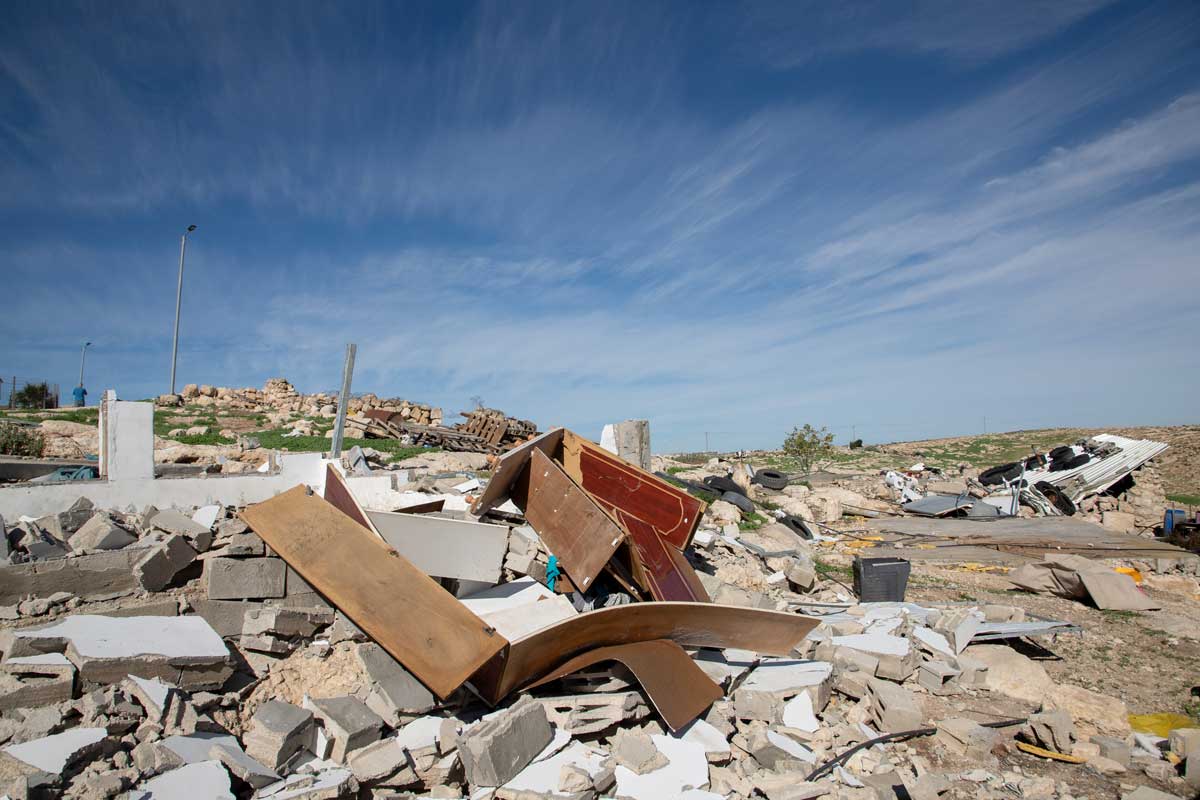
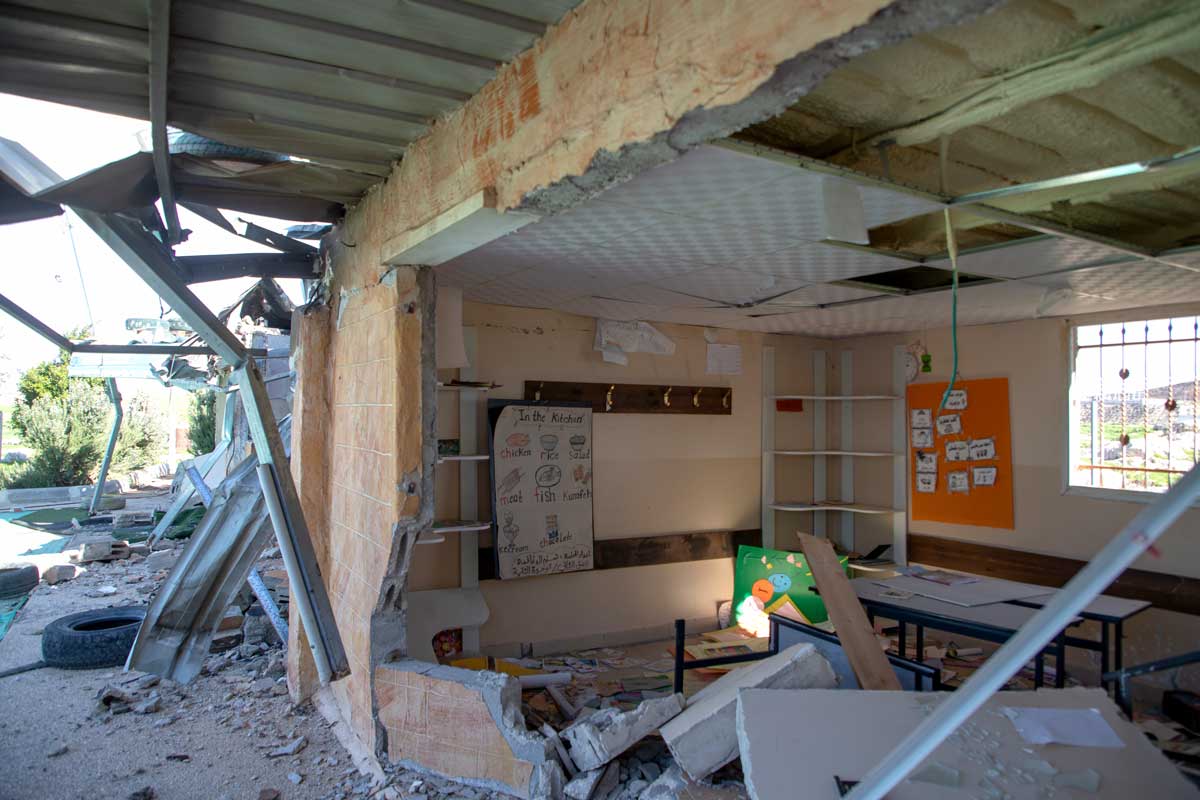
On 23 October, two settlers arrived at the Samamrah family’s home, pushed the mother, Hanaa Abu al-Kabash, drained two water tanks and left. On 24 October, settlers arrived again, attacked residents with stones, smashed solar panels and windows in one home, and drained water tanks. On 25 October, some of the residents left the community. On 27 October, four settlers arrived in a car, harassed residents who were sitting outside their home, ordered them to stop filming the incident and threw a stun grenade at them. The residents were forced to go back inside. Following this attack, the rest of the residents decided to leave and by the end of October, no one was left. On 4 December 2023, an Israeli activist arrived at the site where the community lived with foreign journalists. They discovered settlers had destroyed 10 residential structures, an agricultural structure and the school.
Background
The residents of Khirbet Zanutah, a community that lay in the southwestern Hebron Hills, made their living as shepherds. For several generations, they lived in naturally formed caves to which they added stone entrances. During the 1980s they began building stone houses and temporary structures. There is an archeological site in the village and an ancient mosque that have been marked as such during the British mandate era.
In 2007 the Civil Administration issued demolition orders for most of the village structures for having been built without permits. However, no master plan was ever drawn up for this village, so there was no plan on which building permits could be sought. The Civil Administration justified the absence of a plan, arguing that the village was too small to have a master plan prepared for it – and that the distance from the village to the nearest town, a-Dhahiriya, is too great.
In November 2007, the Association for Civil Rights in Israel (ACRI) filed a petition to the High Court of Justice on behalf of the villagers, submitting the villagers’ objections to the demolition orders issued by the Civil Administration for 22 structures in the village, which include residences, sheep pens and a donkey shed. The court issued an interim injunction prohibiting implementation of the demolition orders. In May 2012, at the request of ACRI, the interim injunction was expanded to include other demolition orders issued to six residences, three cisterns and two sheep-pens in the village.
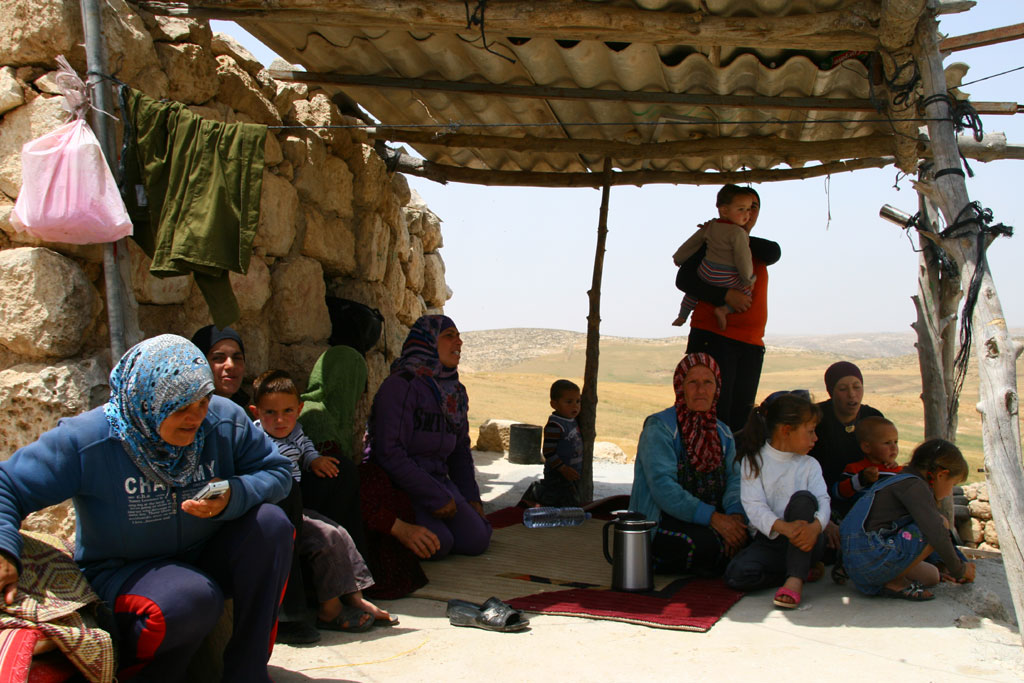
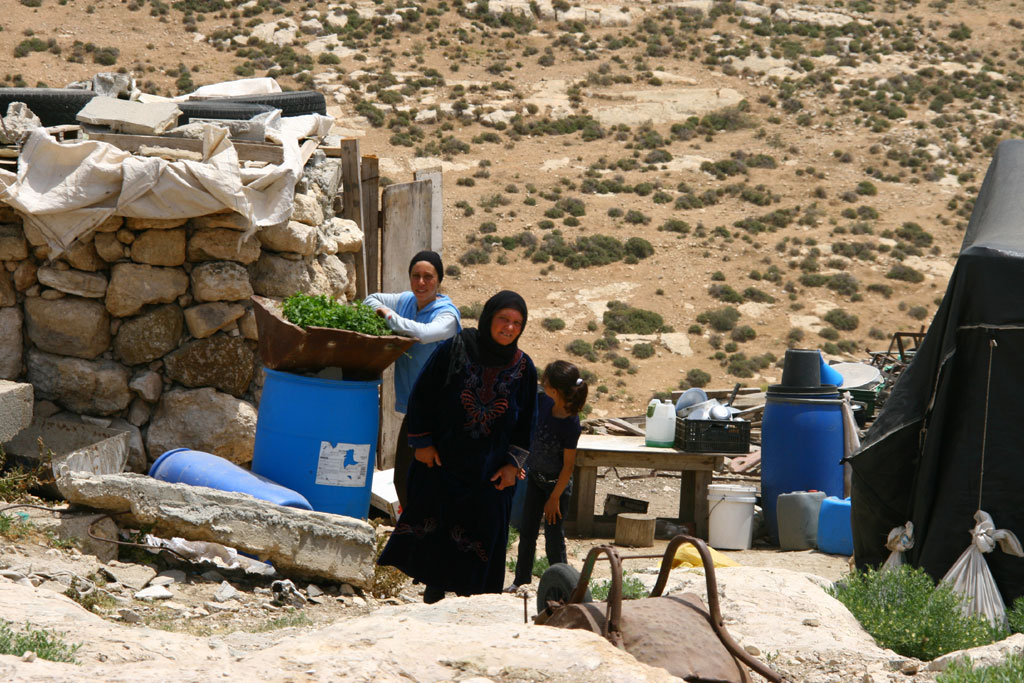
Palestinian women, Khirbet Zanutah, South Hebron Hills, 3 May 2012. Photo: B'Tselem.
On 30 July 2012 the petition was heard. The justices instructed the state representatives to present an alternative solution for the village residents and to advise the court within 30 days whether the state intends to submit a plan that would enable and regulate construction in the village.
In its response, finally filed in late 2013, the state proposed that the petitioners submit a plan to relocate the village to Area A, near the town of a-Dhahiriya. From 2014 to 2017, the court held several hearings in which the state repeatedly emphasized that it has no intention of allowing the village to remain in its current location.
In a hearing held in early 2017, the state announced that it is willing, at present, to hold back from implementing the demolition orders issued for the structures covered by the petition, as it is formulating new planning criteria that may also affect the village. The state asked the court to strike the residents’ petition and, despite the petitioners’ objections, the court granted the motion and dismissed the petition. The judges stated that the existing demolition orders for Khirbet Zanutah would not be carried out until the state finishes formulating its criteria. The court prohibited the villagers from erecting any new structures and ordered the state to give the petitioners 30 days notice, should it decide to implement any demolition orders in the future.
As Khirbet Zanutah does not receive educational services, the villagers have had to build a primary school with financing by a humanitarian aid organization, despite the court order against new construction. The school was completed on 25 March 2018. On 9 April, the Civil Administration demolished the school, which had 33 students ranging from first to sixth grade.