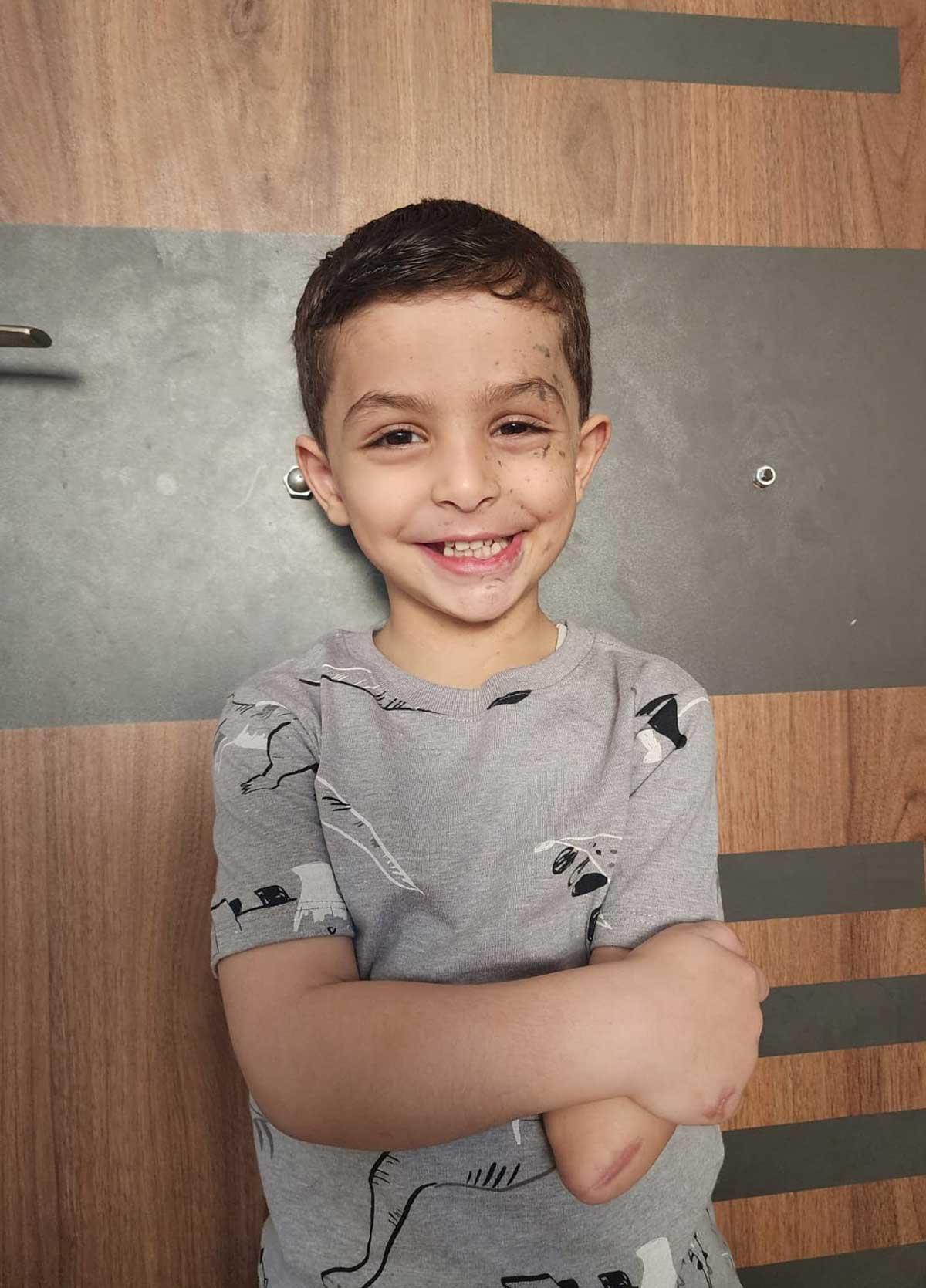
A 45-year-old mother of three, Maha described the recovery challenges facing her nephew ‘Omar, 5, who lost his parents and sister in an airstrike that led to the amputation of his arm
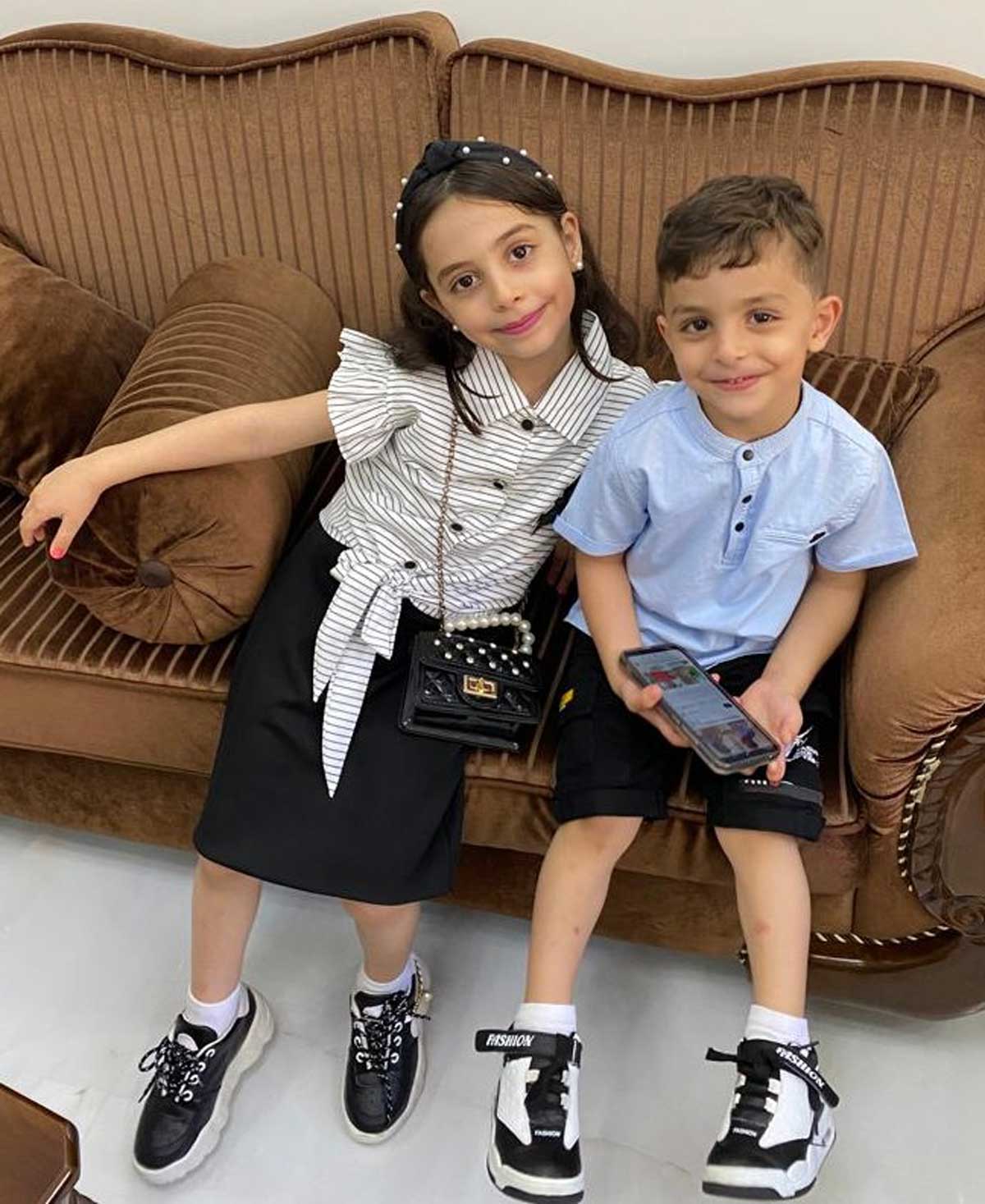
Until the war, I lived with my husband, Mu’in Abu Rizeq, 50, and our three children, Lina, 19, Mahmoud, 17, and Lana, 15, in a high-rise in the city of a-Zahraa, south of Gaza City. My brother Hazem Abu Kweik and his family lived in a neighboring . Another brother, Mustafa Abu Kweik, 43, who lived in Gaza City, moved in with us at the start of the war with his wife Maysaa, 38, who had cancer, and their children.
On 19 October 2023, about a week after Mustafa and his family moved in with us, several residential towers in the area were bombed, including ours and Hazem’s. We weren’t hurt, but we realized we had to leave right away.
We left the apartment without taking anything but our phones and the clothes on our backs. When we got down to the street, I told my husband I’d forgotten the bag with all our documents and that I was going to go back up and get it. But when I got to the building entrance, a municipal worker there told me the army was about to bomb the tower, and I couldn’t go up. I turned back and took just a few steps before Israeli warplanes bombed the towers.
My family and Mustafa’s family went to my father, Muhammad Abu Kweik’s house in al-Bureij Refugee Camp in central Gaza. My brother Wasim, 30, also lives there with his family. Hazem and his family moved to his in-laws’ house in a-Nuseirat Refugee Camp, which is also in central Gaza.
After about two weeks, the Israeli army ordered us to evacuate al-Bureij RC as well. My father, Wasim and his family, and my family moved further south, to the home of Wasim’s in-laws in Khan Yunis. Mustafa and his family moved in with friends in Rafah, in southern Gaza. We stayed in Khan Yunis for about a month. At the end of November 2023, when the ceasefire began, we returned to my father’s house in al-Bureij RC.
Hazem visited us several times. The last visit was on 5 December 2023. He took some food for his family, and that was the last time we saw him. The next day, 6 December, at around 10:00 A.M., the army bombed the apartment building in a-Nuseirat RC where his family was sheltering. Several apartments were hit, including the one they were in. When we heard the reports on everyone killed or buried under the rubble, we were in shock. My brother was killed along with his wife Izdihar and their six-year-old daughter Yasmin. Their five-year-old son ‘Omar was the sole survivor from their family. He was seriously wounded and taken to Shuhadaa al-Aqsa Hospital in Deir al-Balah. Hazem’s wife’s brothers, Muhammad and Yusef Abu al-’Eish, also survived because they were out at the time. The parents of Hazem’s wife lived in that building with her brothers and their families. Her parents, two of her sisters-in-law and her two-year-old niece were also wounded.
After the bombing, my brother Wasim went to the Abu al-’Eish home to find out who was hit and to check on the wounded, while my husband went to the hospital to be with ‘Omar. I stayed at home with my children, overwhelmed with grief at what happened to my brother’s family. I couldn’t stop crying. My father is a man of faith and he kept trying to console us. We couldn’t even say goodbye to Hazem, his wife and their child according to our customs, because their bodies were so badly dismembered. Wasim said a farewell and took care of their burial.
‘Omar was severely injured. The doctors had to amputate his left arm. He was also badly injured in the right leg, had shrapnel wounds and burns in his face, and head wounds that required stitches. His condition was very serious, so he was urgently referred for treatment outside Gaza, in Egypt. I traveled with him on 23 December 2023. We stayed in the hospital in Egypt for almost a month, and then, with the help of the Rahma organization, we went to the United States for further treatment. We were there for about a month and a half, and he was fitted with a prosthetic arm. But when we went back to Egypt, he couldn’t manage and was unable to use the prosthetic. I rented an apartment in Egypt, and after about six weeks, my husband and children managed to join us, so now we’re all together.
‘Omar has been suffering badly since he was injured and lost his family. He’s always hiding, doesn’t like to be seen, and tries to hide his amputated arm and his face. He goes to the toilet a lot, but tests showed it’s not a medical issue. The doctor told me it has to do with his mental state.
Meanwhile, he’s started attending preschool here, and I feel his mental state is improving. He spends half the day there, gets psychological support and takes part in recreational activities. But sometimes he tells me, “The kids at preschool ask what happened to my face.” He still can’t use the prosthesis. It’s uncomfortable.
‘Omar is only five years old, and he’s lost both parents and is wounded. His family was bombed before his eyes, even though they did nothing wrong. Everything that could have brought him happiness was taken from him. I try to help him remember his mother, his father and his sister. He doesn’t mention them on his own, only if I tell him about them. He says: “I don’t want to go back to Gaza. I want to stay here.” He’s terrified and doesn’t like to be reminded of what happened.
My husband and I have taken on caring for all his needs. We try to give him everything he asks, nurture him and protect him even more than our own children. He’s become our pampered son. My kids say, “’Omar is our brother now,” and they love him very much. ‘Omar is especially close to my son Mahmoud and sleeps next to him. We do our best to make it up to him and give him the love and care he should have received from his parents.
Despite all our efforts, ‘Omar is a sad boy. Even his laughter sounds sad. But when he sees me crying, he says, “Laugh, don’t cry.”
‘Omar needs further treatment outside Egypt, because they can’t help him with the prosthesis here. He needs a better one that will allow him to use his hand, to eat, drink, and live a normal life like any other child. For now, he needs my help to bathe, get dressed and eat. He also needs plastic surgery, because he still has shrapnel in his face.
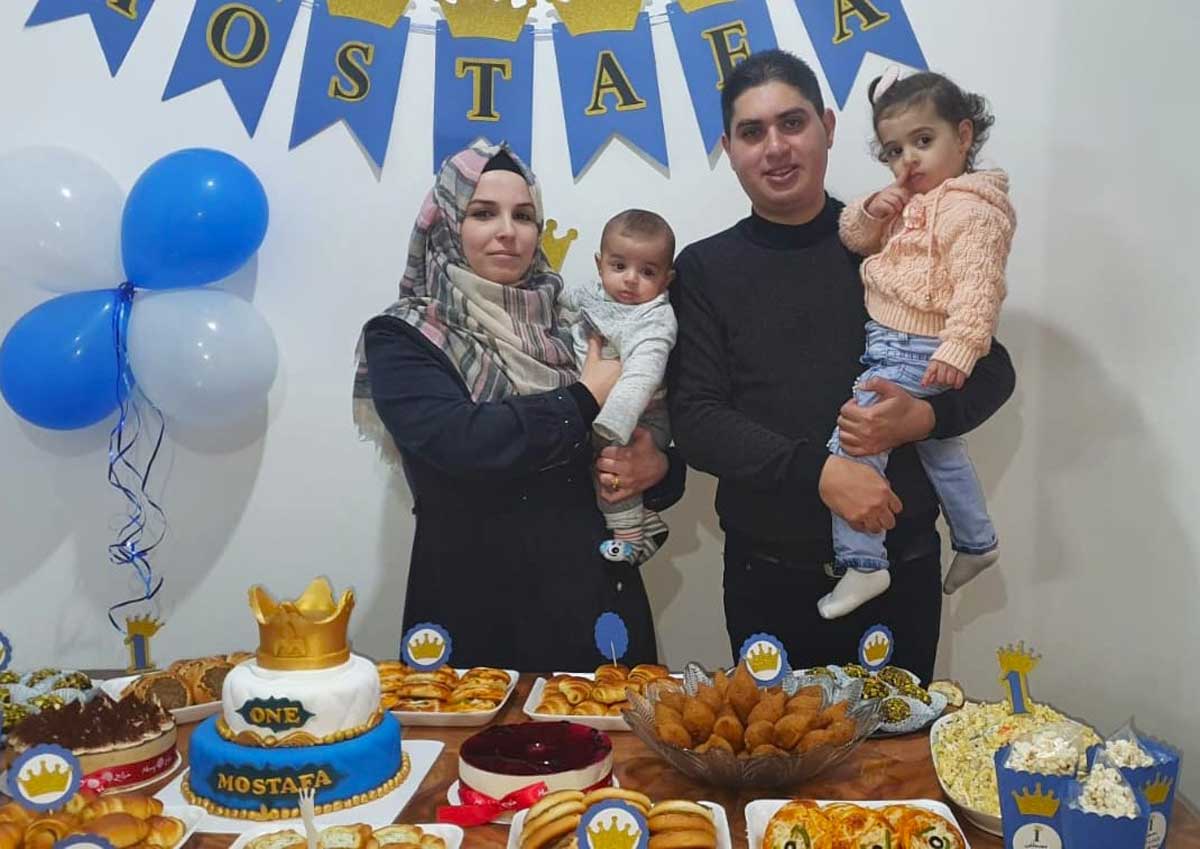
In January 2024, my brother Mustafa managed to get a referral for treatment abroad for his wife Maysaa, who was suffering from cancer. They traveled with their children to the United Arab Emirates, where she was hospitalized. He stayed by her bedside for almost a month, but they couldn’t save her and she passed away. Now he’s alone with the children in the UAE.
* Testimony given to B’Tselem field researcher Olfat al-Kurd on 15 March 2025
‘Omar’s parents and sister, killed in the airstrike:
His father, Hazem Muhammad Abu Kweik, 35
His mother, Izdihar ‘Atef Abu Kweik, 28
His sister, Yasmin Hazem Abu Kweik, 6
Family members wounded in the airstrike:
‘Omar Hazem Abu Kweik, 5
‘Omar’s maternal grandfather, ‘Atef Abu al-’Eish, 65
‘Omar’s maternal grandmother, Maha Abu al-’Eish, 60
His uncle’s wife, Shaimaa Abu al-’Eish
Shaimaa‘s daughter, Maha Abu al-’Eish, 2
His uncle’s wife, Safaa Abu al-’Eish, 28