A 36-year-old mother of five from Rafah, Falastin described losing her daughter, who was badly injured in a bombing, while the family remains displaced
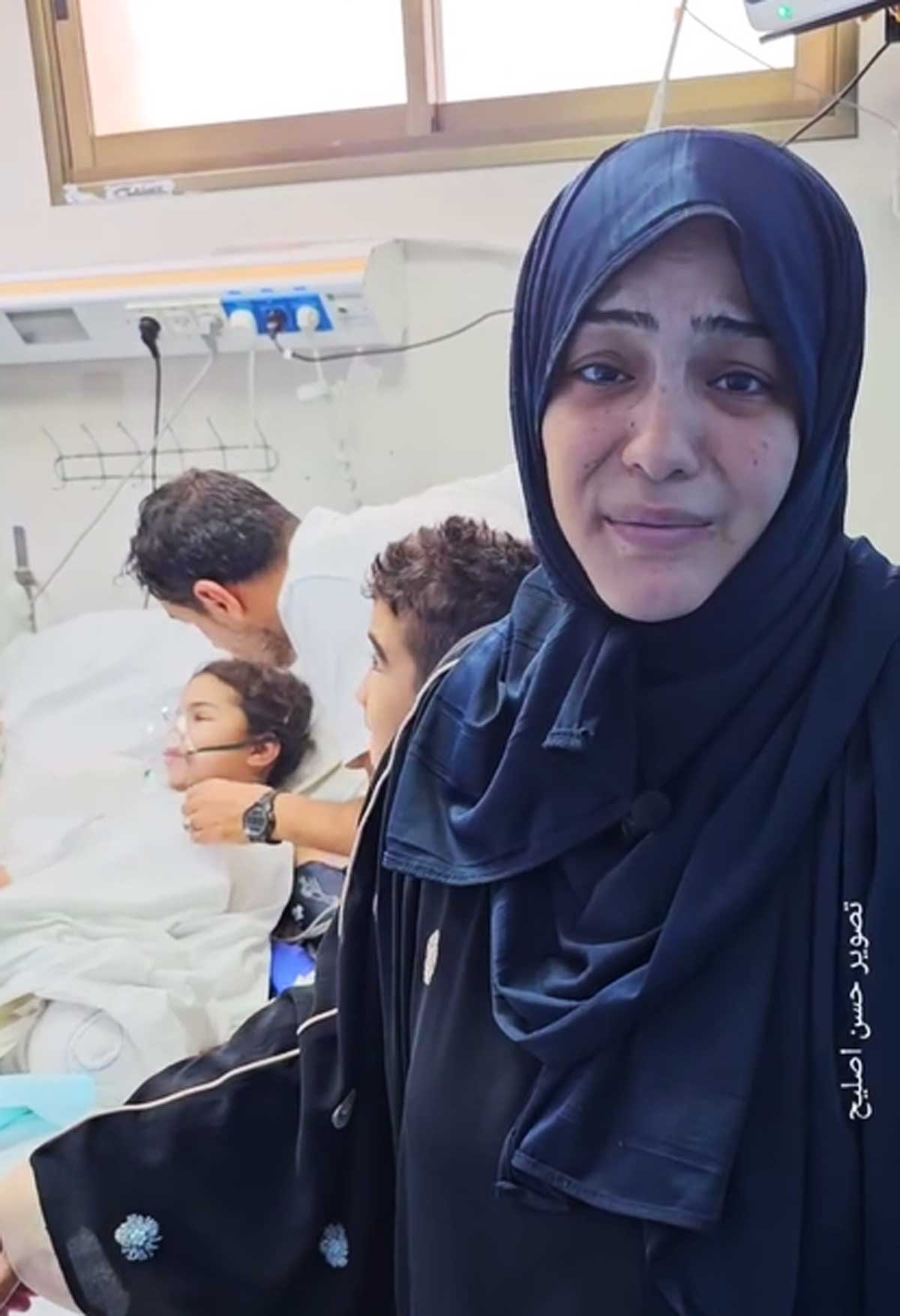
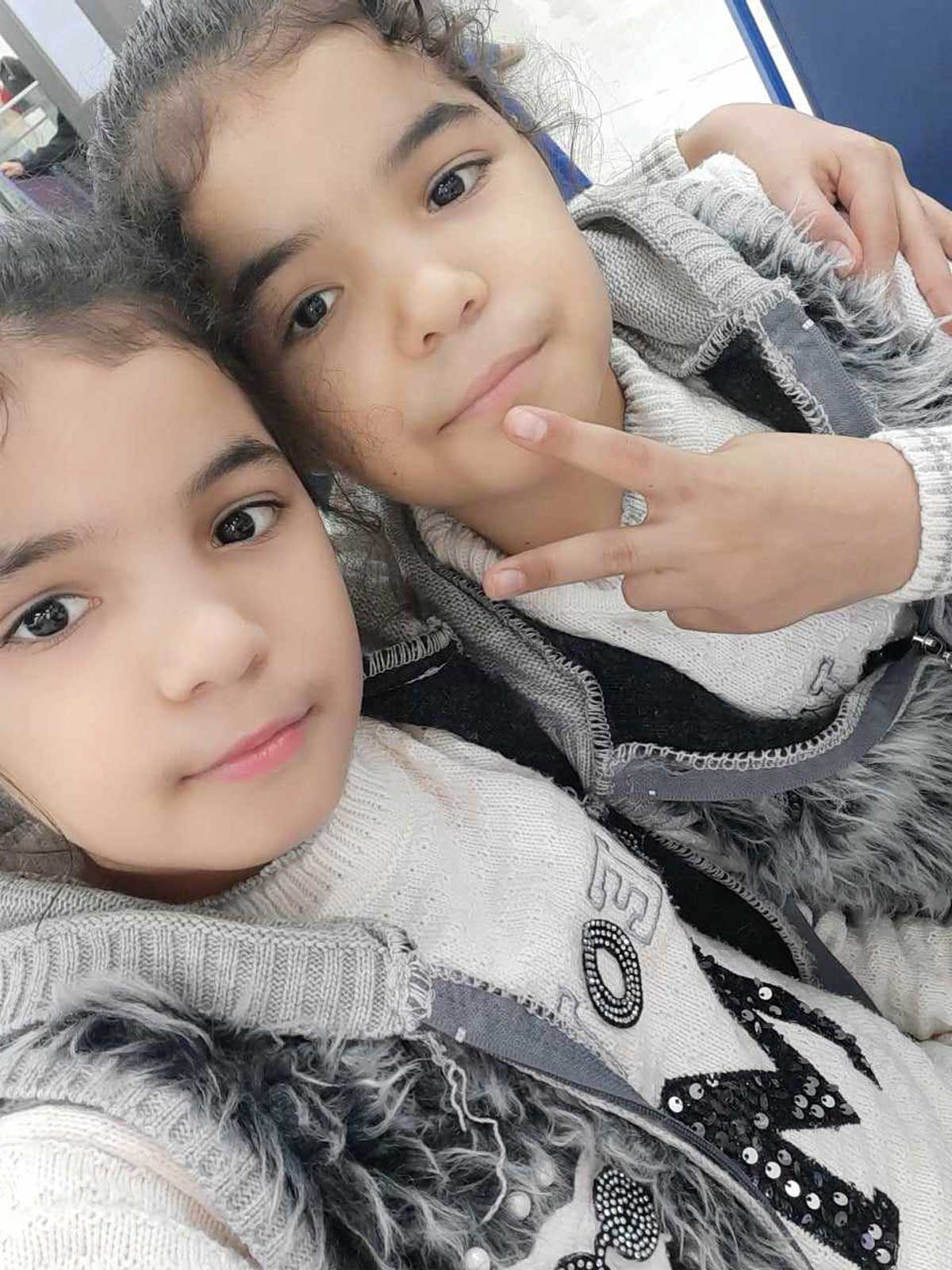
Before the war on Gaza began, my husband, ‘Arafat Barbakh, and I lived with our five children, Arij, 19, Malak, 16, the twins Razan and Rawan, 14, and Muhammad, 9, in a house in the al-Juneinah neighborhood in Rafah. Now, we’re living in a tent in the al-Mawasi area in Rafah.
When the war broke out, we stayed at home and didn’t leave, despite the bombings nearby. We thought the location was safer than other places, but we soon realized there was no safe place left in the Strip. Even then, we were already living under extremely difficult conditions, because around 1 million displaced people had fled to Rafah. The city became overcrowded, the electricity and water were cut off, and we suffered from food shortages and exorbitant prices for the limited goods that were still available. There were bombings, and I was afraid for my husband and children. I was terrified I would lose one of them.
In May 2024, the military invaded Rafah. I was at the European Hospital, about 10 kilometers north of Rafah, with my twin daughters Razan and Rawan, who have thalassemia and need regular blood transfusions. We rushed home, packed a backpack with personal belongings for each of us, and left the house with bombs falling around us.
We went to the al-Mawasi area in the northwestern part of Rafah. For a week, we stayed in an open area with no tent, sleeping under the sky. Later, we moved into a tent with my sister and her husband. Twelve of us lived in one tent for two very difficult months. Then we relocated to a relative’s house in Khan Yunis, stayed there for about a month and a half, and eventually returned to al-Mawasi, moving between my brother-in-law ‘Awad’s tent and a two-story house owned by my brother-in-law Seif.
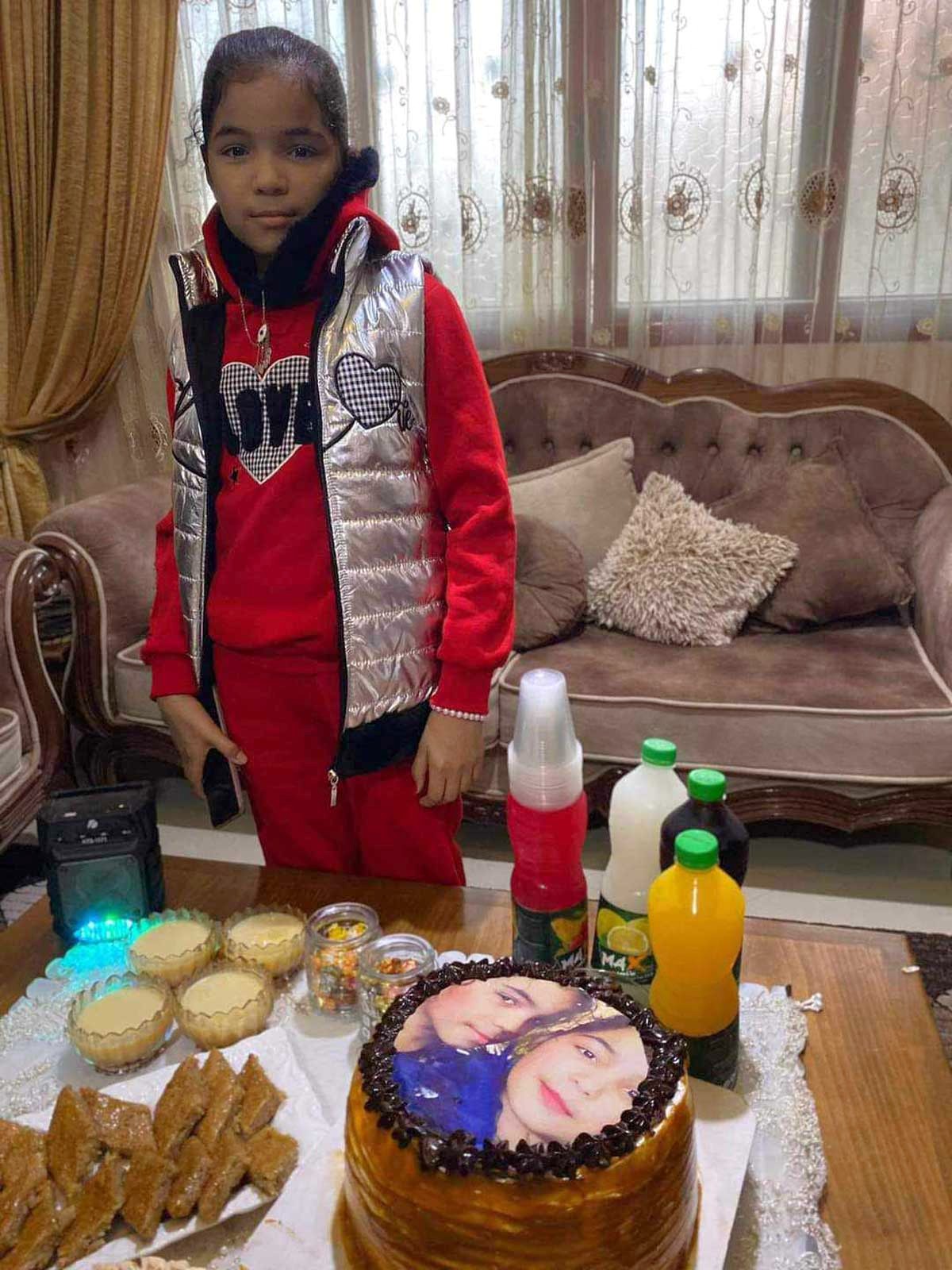
On 29 September 2024, around 10:00 A.M., we were at Seif’s house. My husband ‘Arafat was downstairs with the girls, and I was upstairs helping Muhammad shower and doing laundry. Suddenly, I heard a loud explosion very close by. Then came two more very powerful blasts, and all the windows and doors around me went flying or shattered. The air filled with black smoke, and I couldn’t move. My husband ‘Arafat came upstairs to us and said the girls were okay. I went down to check on them but couldn’t find Razan. It turned out her uncle Seif had already taken her to the Red Crescent Hospital in al-Mawasi.
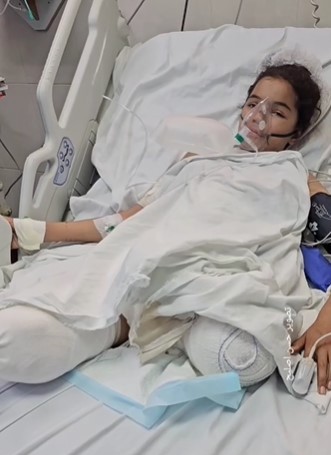
I went to the hospital to look for Razan. It was full of wounded people. When I arrived, Razan was in surgery. They told me her condition was stable and that she would need platinum implants in her legs. She had second-degree burns and shrapnel injuries to her legs. I was terrified for her and afraid that the implants would cause her terrible pain. At that point, I didn’t know they had amputated her legs. After about three hours, Razan was transferred to Nasser Hospital in Khan Yunis, and I went with her in the ambulance.
When we arrived, I asked the doctor about her condition. He told me her legs had been amputated. Her uterus, part of her liver, and one lung had also been removed because of shrapnel damage. Only then did I understand how serious her condition was. When I saw her legs, I fainted.
Razan stayed in Nasser Hospital for about two months. The Ministry of Health issued her a referral for continued treatment outside the Gaza Strip, but the border crossings were closed and the wounded couldn’t leave.
They took Razan into surgery every day to clean her wounds and change her dressings, but she developed sepsis. Her stumps leaked fluid, bled heavily, and smelled bad. She lost weight, and her body swelled from edema. I cried for her because I knew she was in excruciating pain. One time she said to me, “I’m going to die,” and it broke my heart into pieces. Rawan, her twin sister, visited her constantly even though she was also injured in the bombing. She just wanted to be by her sister’s side all the time.
Razan’s condition deteriorated. The painkillers didn’t help, her digestive system barely functioned, and her blood oxygen level kept dropping. On 2 November 2024, Razan asked to see her father. He came to the hospital in the morning and hugged her over and over again. She said, “Mom, don’t leave me. Stay where I can see you.” She wanted to say goodbye to both of us and didn’t take her eyes off us until she took her last breath and the machines went silent. Those were the hardest, most painful moments of our lives.
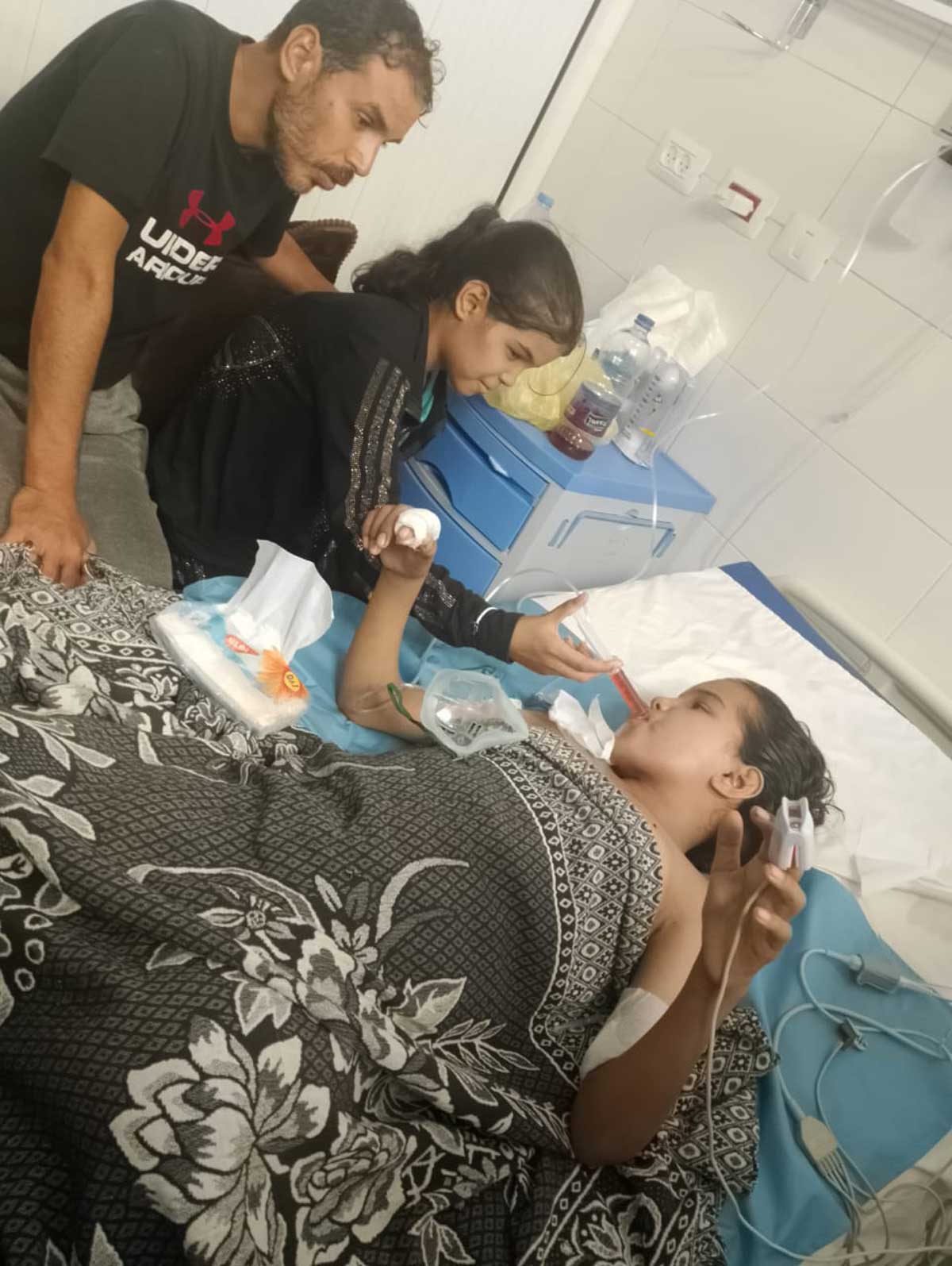
We buried Razan that same day. We lost Razan, and everything beautiful along with her. I don’t have the strength to carry on living without her. It’s been four months since Razan died. My beautiful, innocent girl. Her father, brothers, and sisters miss her terribly too. We feel her absence every moment and have not forgotten her for a second. Everyone loved Razan.
She was very badly injured, but God gave us one last month with her so we could say goodbye. That farewell left us shocked and grieving, but it’s our fate. We are still living in a tent in al-Mawasi, still displaced. The Israeli military hasn’t allowed us to go back to our homes, if we even have homes left after they demolished Rafah completely. Now it’s the month of Ramadan and we’re spending it here in the tent, under horrific conditions. The border crossings are all closed and every person in the Gaza Strip is in the grip of severe hunger.
* Testimony given to B’Tselem field researcher Olfat al-Kurd on 11 March 2025