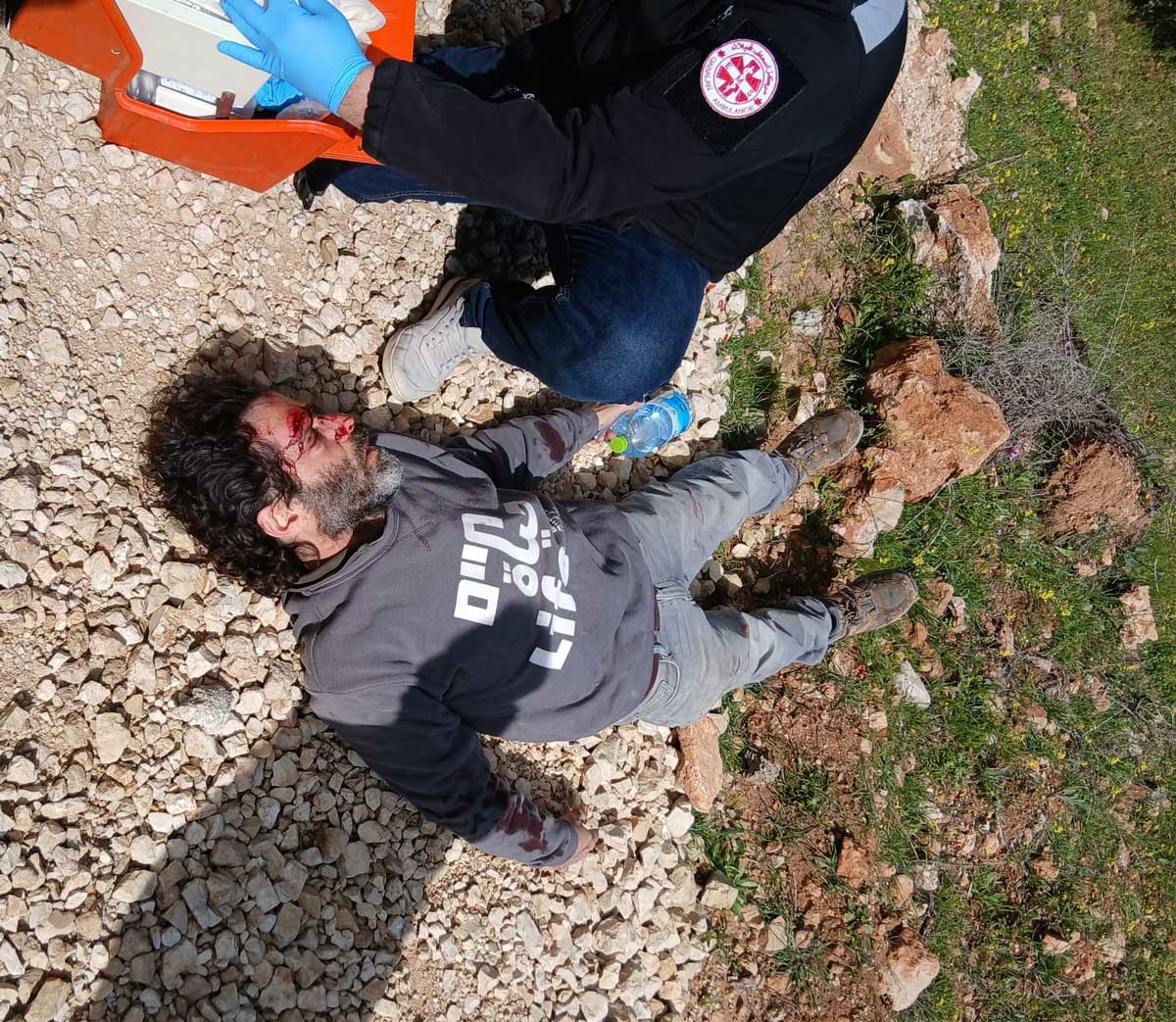
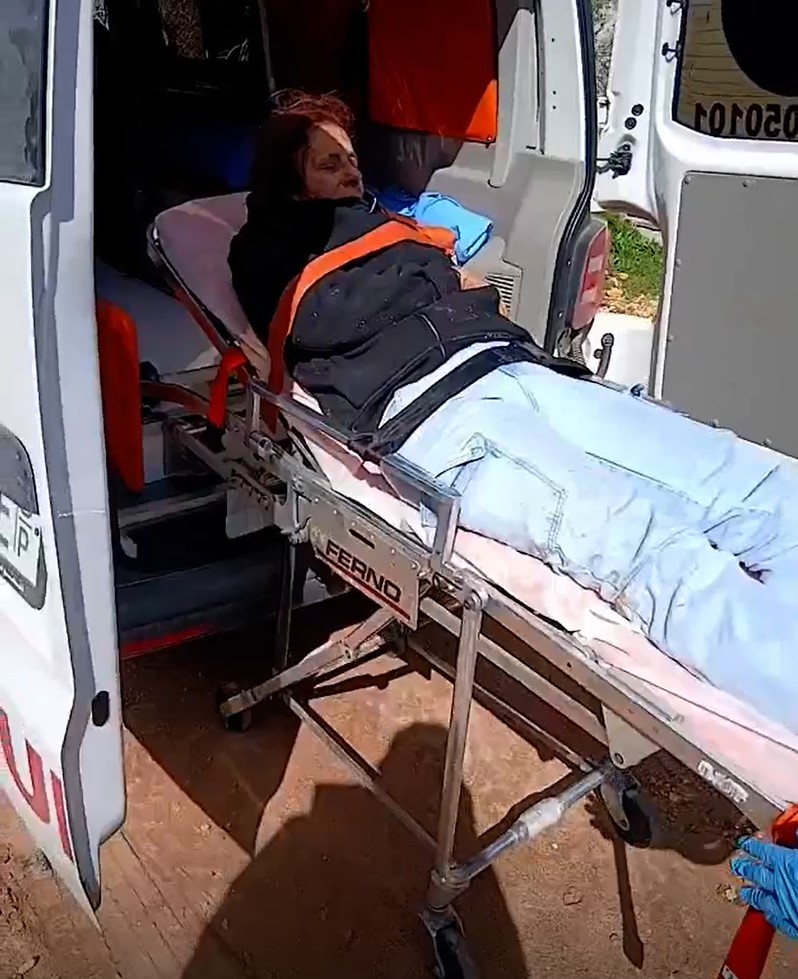
Oded Paporish after the assault. Photo courtesy of the activists
On 27 February 2026, masked settlers armed with clubs drove on an ATV into Qusrah from the direction of the outpost, and attacked Israeli activists who were escorting the owners of a vacant house in the part of Qusrah under threat by settlers.
The activists first escorted the Hassan family to their home, where they helped the family tidy up and start repairing the damage, and then went with the other family to their vacant house.
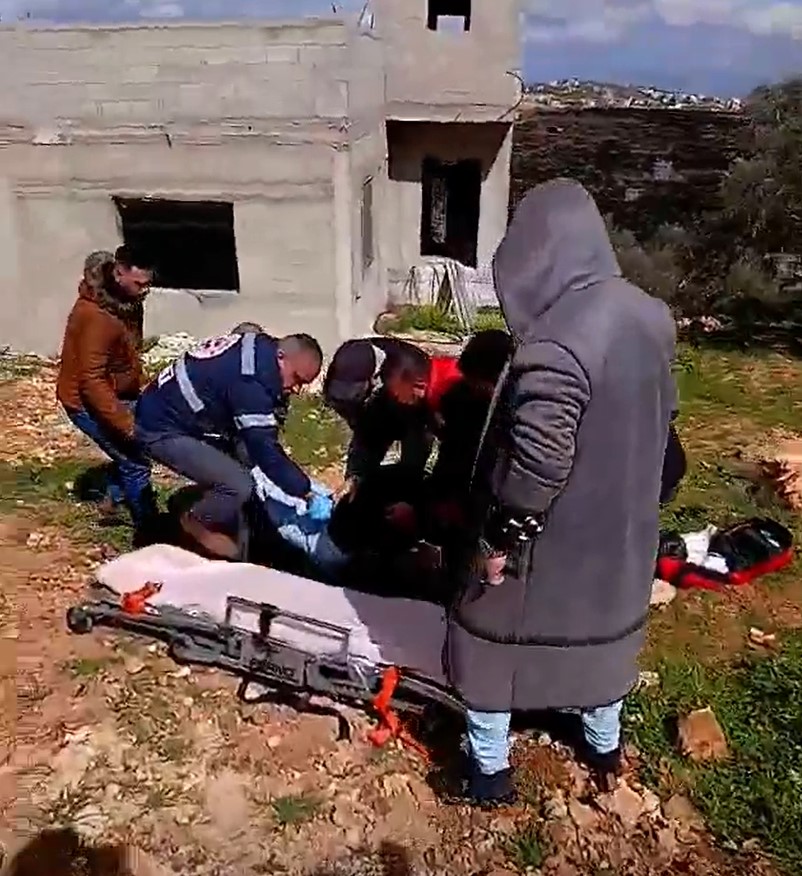
Adi Cohen being evacuated after the assault. Photo courtesy of the activists
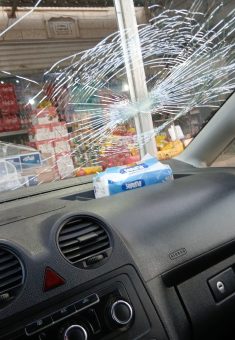
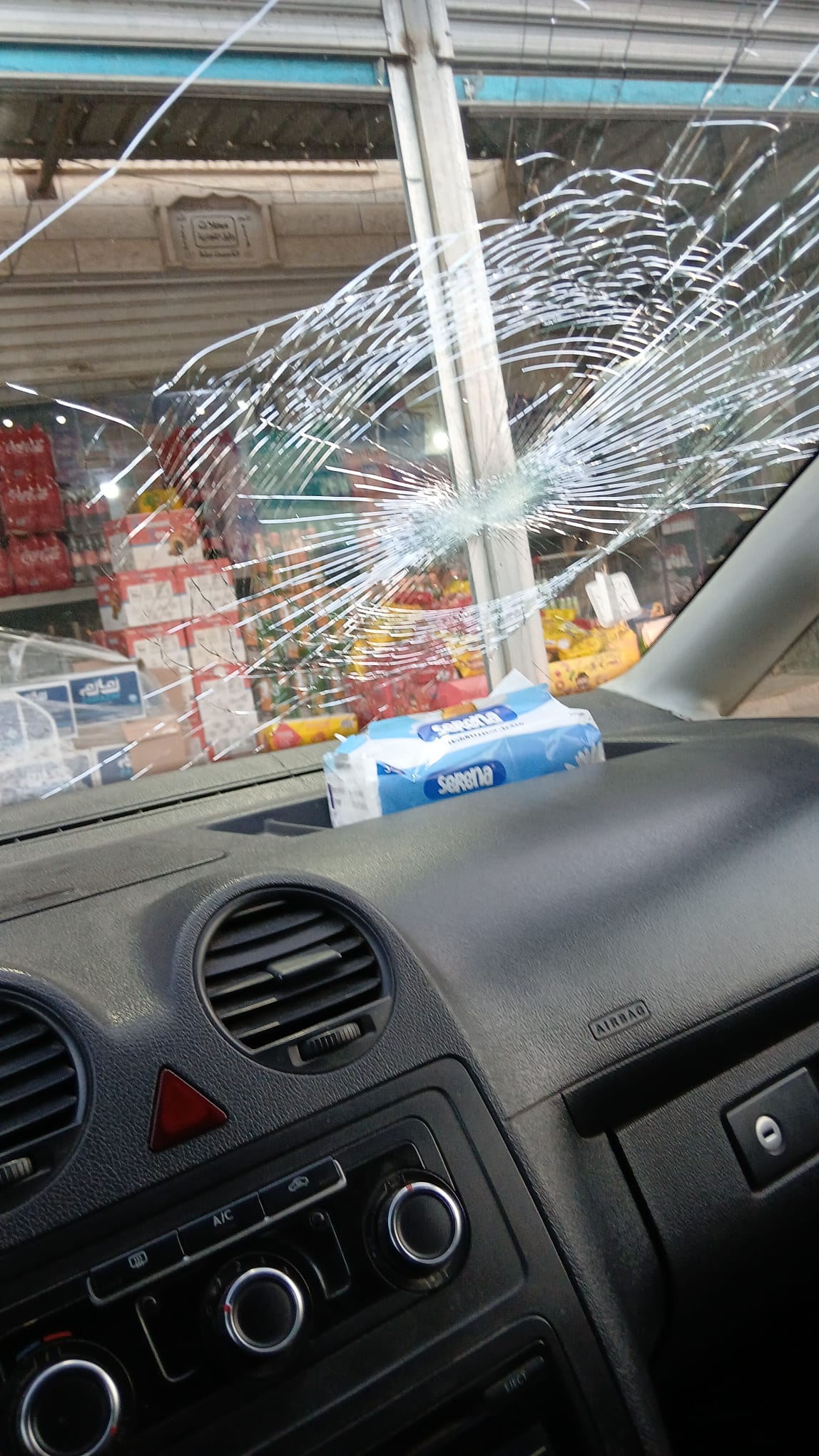
Soon after, the settlers drove up, got off the ATV and immediately started beating the activists with clubs and large stones. They seriously injured two of them, Oded Paporish and Adi Cohen, and lightly injured another. They also vandalized the family’s car.
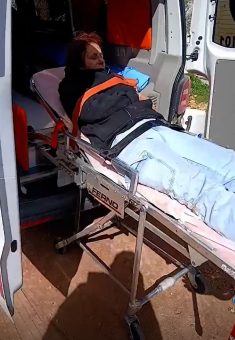
The seriously injured activists were evacuated by helicopter, Paporish with severe head injuries, fractures in his nose and hand, and a deep gash above his eye and Cohen unconscious, with severe head injuries and fractures in her pelvis and hand.
The settlers were joined by about 20 other settlers and began attacking the neighboring village of Jalud. They threw stones at residents and homes, torched a storage space, burned down a vehicle, and broke into other homes and vandalized the contents. Soldiers who arrived did nothing to remove them and fired tear gas canisters at residents trying to help the owners of the homes under attack.
During the attack, an army vehicle was filmed blocking the road to the spot. The soldiers did nothing to stop the violence.
Oded Paporish, 51, a father of two and solidarity activist who was assaulted in Qusrah, recounted in a testimony he gave to Avishay Mohar from B'Tselem:
Adi Cohen being evacuated after the assault. Photo courtesy of the activists
On 27 February 2026, I arrived in Qusrah with two other activists, Adi Cohen and another woman. We escorted members of the Hassan family back to their home, which they were forced out of a week earlier, at the foot of Jabal ‘Ein ‘Ena. On the top of the hill is a house that settlers took over.
The family drove in their car, and we drove in ours. They parked a bit farther away. There were reports that settlers had entered the family’s home again before we arrived. When we got there, we found the result of extreme vandalism – things were broken, water tanks slashed, and water pumps were stolen.
We helped them tidy up a bit and weren’t too afraid, because the settlers were far away at the top of the hill. At some point, one of the children noticed a settler watching us from up there.
The family car vandalized by the settlers. Photo courtesy of the family
There were also some vehicles coming and going, but they didn’t come down toward us. After about two hours, at around 12:30 P.M., two people from the village came because they also wanted to check on their house. It’s about 50 to 100 meters from the house we were in, a bit farther up the hill.
This time, we rode with them in their car. We inside the house, which is a concrete structure overlooking the wadi that separates it from Qusrah. The women activists stayed by the Palestinians’ car.
I went in holding a video camera, with my cellphone in my pocket and a stills camera on me. Very soon, we heard the ATV and the activists called out to me. I jumped over the bridge that runs between the house and the dirt road, and saw an ATV skid to a stop in front of the activists. Four masked settlers got off the ATV and started hitting the activists with clubs.
I started backing away, and just then, one of the settlers started chasing me. They shouted, “Where are the Arabs? Where are the Arabs?” I kept retreating, and heard Adi screaming.
I felt them catch up to me and hit me a bit with the clubs, so I grabbed a large stone and turned around to them, still holding the video camera in my hand. They stopped and then I said, “Don’t come any closer, I’ll throw it.”
They wavered a bit and then started throwing stones at me. I hesitated to throw the stone and they must have caught on. Then one of them said to the other, “Two, three, go” and they jumped on me and hit me on the hand with a club so I would let go of the video camera. One settler said to the other, “Get him off me,” because at some point I must have grabbed his legs and tried to bring him down or something like that. They kept on hitting me and took my video camera. I ended up with broken fingers.
Then the settlers tried to take my other camera, and I wouldn’t give it up. They kept hitting me more. In the end, one of them gave up trying to take it and broke it. Then, at some point they just stopped. They must have heard one of the activists shouting or something like that. They got on the ATV and sped off.
I was left on the ground. I was sure I’d lost my eye and started writing something in the activists’ group, but I realized I wasn’t really making sense because I was semi‑conscious. So I took a selfie and sent it to the group to let them know how serious the situation was. One of the activists came running and called out to me. I don’t remember if I managed to get up or was still lying there. I saw that one of the clubs the settlers left there was broken from so many blows. After a while, two Palestinian ambulances arrived.
They took us in an ambulance toward Rafidya, but on the way we were transferred to a military ambulance and the soldiers yelled at the paramedic.
They cut my brow open. I have a huge wound over my eye, which was swollen and couldn’t move. I also have fractures in my nose, an unstable fracture in my thumb, little finger, wrist and index finger, and I took serious blows to the head. I can’t feel half my head and will need more tests. I get extremely dizzy when I lie down or sit up. The whole world spins.
Two weeks after I was discharged, I had surgery on my thumb and little finger to set the fractures.
I think the whole incident took ten minutes at most. Ten life-changing minutes, but all in all, no more than ten minutes. They simply came there focused and ready to murder. If we hadn’t been evacuated by helicopter, Adi wouldn’t have survived.
Israel’s regime of apartheid and occupation is inextricably bound up in human rights violations. B’Tselem strives to end this regime, as that is the only way forward to a future in which human rights, democracy, liberty and equality are ensured to all people, both Palestinian and Israeli, living between the Jordan River and the Mediterranean Sea.
Since the Hamas attack on 7 October 2023, Israel has acted in a coordinated and deliberate manner to destroy Palestinian society in the Gaza Strip, committing genocide against its residents. In light of Israel’s actions in Gaza, the public statements made by Israeli decision-makers, and the international community’s failure to take effective action, there is a serious risk that the Israeli regime will expand the genocide to other areas under its control—first and foremost, the West Bank.
B’Tselem calls on the Israeli public and the international community to use every tool available under international law to bring an immediate end to Israel’s genocide against the Palestinian people.