Ethnic cleansing of Palestinian communities and lone families in the West Bank (59 communities as of 16 Mar 2026)
Demolitions and confiscations in communities facing expulsion
Thousands of people – residents of dozens of Palestinian communities located throughout Area C, the West Bank – face imminent expulsion by Israeli authorities on a variety of pretexts. The live blog will pool the regular updates we get from B’Tselem field researchers regarding the communities and any attempts by authorities to expel them. Click on the number of a community cluster and then on the tent icon marked on the map for further information about communities facing the risk of expulsion.
The information in the blog reflects the latest state affairs known to us and is updated as we receive new data from the field. For more on the communities facing expulsion, click here.
The information in the blog reflects the latest state affairs known to us and is updated as we receive new data from the field. For more on the communities facing expulsion, click here.
6 Mar 2025
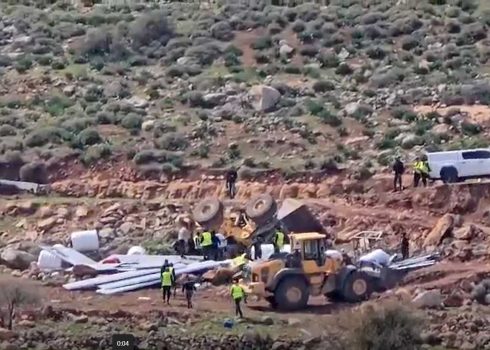
Demolition of structures in Khirbet a-Twayel, 6 March 2025. Photo courtesy of residents
Israel demolished and confiscated five homes, water tanks and additional structures, sealed caves used as livestock enclosures, destroyed a road, and damaged the power grid
On Thursday, 6 March 2025, Civil Administration personnel, accompanied by Border Police officers and equipped with an excavator, arrived at the community of Khirbet a-Twayel in Nablus District. The forces demolished five homes, leaving five families—25 people, including 12 minors—homeless.
The forces also demolished a fence and three shacks used as livestock enclosures, and dismantled and confiscated another shack used as a livestock enclosure and an outhouse. They demolished or confiscated 10 water tanks, sealed two caves used as livestock pens and for storage, destroyed a road, and damaged the community’s power grid.
The structures were erected after the Civil Administration previously demolished the families' homes and livestock enclosures, some on 10 December 2024 and others on 8 January 2025.
11 Mar 2019
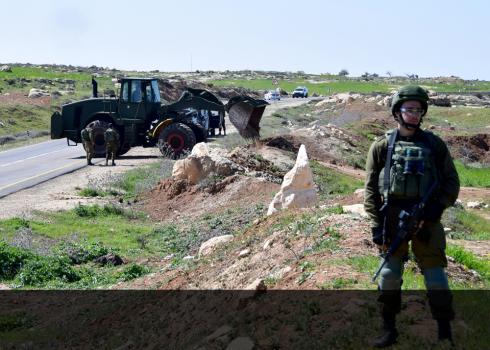
Military bulldozer blocking off a road in the South Hebron Hills. Photo by Nasser Nawaj’ah, B’Tselem, 11 March 2019
Israeli military blocks roads leading to several Palestinian communities in the South Hebron Hills
This morning (Monday, 11 March 2019), at around 9:00 A.M, Israeli soldiers came to the South Hebron Hills, bringing a bulldozer. They piled up boulders, sandpiles and concrete blocks to block access from Route 317 onto two roads that lead to the community of She’b al-Batem. Earlier this year, in January and February, the Civil Administration had already dug deep trenches to block these roads from the east. Also this morning, the troops similarly blocked side roads leading to the nearby communities of Khallet al-Mayah, Khirbet Wadi Ejheish and al-Kharabah.
7 Mar 2019
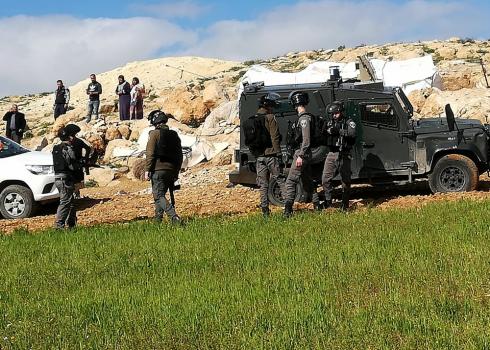
Confiscation of the tent in Khirbet al-Fakhit. Photo by Nasser Nawaj'ah, B'Tselem
Civil Administration confiscates six tents in three communities in Masafer Yatta, South Hebron Hills
Today, Thursday, 7 March 2019, at around 8:00 A.M., Civil Administration personnel came with a tractor, accompanied by a military jeep escort and Border Police officers, to Khirbet al-Fakhit in Masafer Yatta, in the South Hebron Hills. The officials confiscated a tent that was home to a family of eight, four of them children, part of the year. They then went east to Khirbet al-Maghaz, where they confiscated another tent that was also the seasonal home of a family of five, two of them children. After that, the force continued east to Khirbet a-Duqeiqah, where they confiscated three tents that were seasonal homes to an extended family of sixteen, four of them children, and a tent that served as a livestock pen.
19 Feb 2019
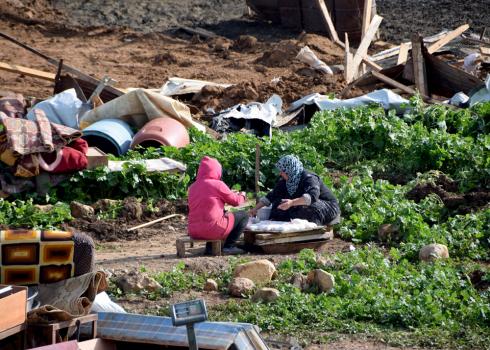
Family members making cheese by the ruins of their home. Photo by 'Aref Daraghmeh, B'Tselem, 19 Feb. 2019
Civil Administration demolishes two homes in Khirbet a-Ras al-Ahmar
Today, Tuesday, 19 February 2019, Civil Administration officials came with soldiers to Khirbet a-Ras al-Ahmar in the northern Jordan Valley. The force demolished two residential tents. One was home to a family of four and the other to one person. The force also demolished six tents that were used as a livestock pen, as well as a livestock paddock.
13 Feb 2019
Twice in two weeks: Israeli CA digs trench to prevent access to the Palestinian communities of Masafer Yatta
On 31 January 2019, the Israeli Civil Administration dug up the road linking the community of She’b al-Batem with the rest of the communities in Masafer Yatta (Greater Yatta) in the South Hebron Hills. Two days later, the local residents repaired the road. Yesterday (Monday, 11 February 2019), at around 8:00 A.M., Civil Administration personnel returned with a Border Police and military escort. They brought a bulldozer and a tractor and re-dug a deep trench across the road.
13 Feb 2019
Civil Administration cuts and confiscates water pipe servicing 12 communities in the Masafer Yatta area in South Hebron Hills
On Wednesday, 13 February 2019, at around 8:30 A.M., Civil Administration personnel came with a military-jeep and Border Police escort to a site near the village of a-Tuwani in the South Hebron Hills. The forces, which also had two crane trucks and a digger, unearthed a five kilometer stretch of pipe which was laid about two months ago to supply water to twelve communities in the area with a total population of more than 1,000. The residents previously relied on water supplied by tankers. The Israeli forces cut the pipe and confiscated it.
Israel laid water infrastructure, using the water company Mekorot, throughout the South Hebron Hills, to supply water to settlements and outposts and their agricultural projects such as dairy farms, greenhouses and vineyards. This infrastructure runs near the Palestinian villages, but, with the exception of Khirbet a-Tuwani, the Civil Administration never connected the villages to this infrastructure.
Other villages in the area have had to store rain water in cisterns or buy tanker-delivered water. The Civil Administration has issued demolition orders for many of the water cisterns, claiming they had been built without permits, even though some of them date back to the British mandate. About two months ago, residents of a-Tuwani allowed neighboring communities to connect to their water pipe, and today, Israel confiscated the pipe and cut off the water supply. Withholding the water supply is yet another step in a series of abusive measures the authorities have been taking against local residents, in a bid to expel them from the area and their homes.
13 Feb 2019

Civil Administration personnel cut pipe used to suply water to Masafer Yatta communities
Civil Administration cuts and confiscates water pipe servicing 12 communities in the Masafer Yatta area in South Hebron Hills.
Today, Wednesday, 13 February 2019, at around 8:30 A.M., Civil Administration personnel came with a military-jeep and Border Police escort to a site near the village of a-Tuwani in the South Hebron Hills. The forces, which also had two crane trucks and a digger, unearthed a five kilometer stretch of pipe which was laid about two months ago to supply water to twelve communities in the area with a total population of more than 1,000. The residents previously relied on water supplied by tankers. The Israeli forces cut the pipe and confiscated it.
Israel laid water infrastructure, using the water company Mekorot, throughout the South Hebron Hills, to supply water to settlements and outposts and their agricultural projects such as dairy farms, greenhouses and vineyards. This infrastructure runs near the Palestinian villages, but, with the exception of Khirbet a-Tuwani, the Civil Administration never connected the villages to this infrastructure.
Other villages in the area have had to store rain water in cisterns or buy tanker-delivered water. The Civil Administration has issued demolition orders for many of the water cisterns, claiming they had been built without permits, even though some of them date back to the British mandate. About two months ago, residents of a-Tuwani allowed neighboring communities to connect to their water pipe, and today, Israel confiscated the pipe and cut off the water supply.
Withholding the water supply is yet another step in a series of abusive measures the authorities have been taking against local residents, in a bid to expel them from the area and their homes.
7 Feb 2019
Civil Administration temporarily displaces more than 50 families in the northern Jordan Valley
Yesterday, Wednesday, 6 February 2019, at around 10:00 A.M., Civil Administration personnel came with a military-jeep escort to the Palestinian communities of: Khirbet a-Ras al-Ahmar, al-Burj, Khirbet al-Malih and 'Ein al-Meyteh in the northern Jordan Valley. The forces instructed more than 50 families numbering a total of 291 people, including 154 children, to leave their homes by 5:00 PM. The instructions came after on Sunday, 3 February 2019, at around 10:00 AM, the families were handed orders for temporary evacuation on two dates: yesterday, 6 February 2019 and 13 February 2019 from 10:00 AM to 5:00 PM.
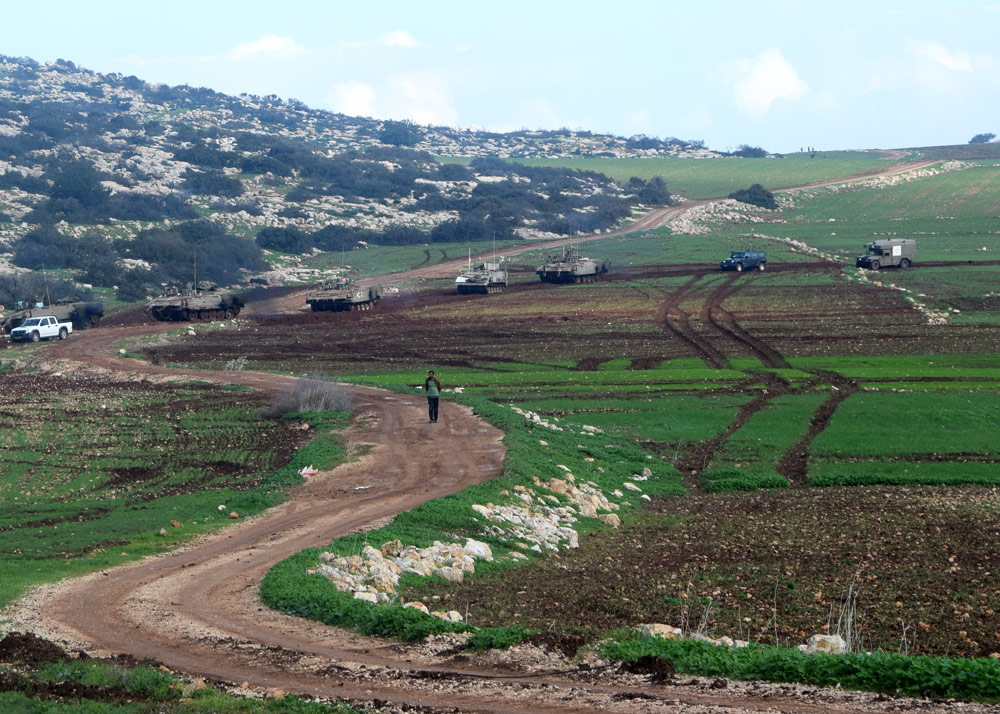
Yesterday, in Khirbet a-Ras al-Ahmar, the forces ordered three families to leave two hours before the time stated in the order. The three families, and the remaining families in the community who left at 10:00 AM had to walk for six kilometers to Khirbet ‘Atuf. In the other three communities, residents used tractors and tractor trailers, some going to Kafr ‘Aqabah and some to Khirbet ‘Ein al-Hilwa. After the families left, the military set up roadblocks at the entrance to Kafr ‘Aqabah and near Khirbet al-Malih, preventing travel between Jordan Valley communities and the city of Tubas for several hours. The military held training exercises with infantry units and dozens of tanks that fired shells.
3 Feb 2019
Israeli CA once again digs trench to prevent access to the Palestinian communities of Masafer Yatta
On the morning of Thursday, 31 January 2019, at around 8:00 A.M., Israeli Civil Administration personnel came with a Border Police escort to the region of Masafer Yatta (Greater Yatta) in the South Hebron Hills. They brought a bulldozer and a tractor which they used to dig a deep trench across the road that connects the community of She’b al-Batem with the rest of the Masafer Yatta communities. The Israeli military had already torn up the road a year earlier, in late 2017, and the residents then repaved it. These travel restrictions are but another step in a long saga of harassment by the authorities against the local residents, adopted in an effort to drive them out of their homes and the area.
17 Jan 2019
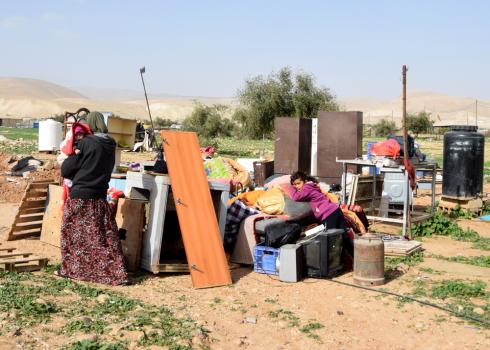
Members of the family next to the contents of their demolished home in Fasayil al-Wasta. Photo by 'Aref Dagharmeh, B'Tselem, 16 Jan. 2019
Civil Administration demolishes two homes (one awaiting occupancy) in the Jordan Valley on a stormy day
Yesterday, Wednesday, 16 January 2019, at around 7:30 A.M., Civil Administration personnel came with a digger and a military-jeep escort to the Palestinian community of Fasayil al-Wasta in the northern Jordan Valley. The forces demolished a caravan housing a six-person family, including four children, and a concrete structure the family was using for a kitchen and bathroom. The forces later arrived at a-Nuwei’mah a-Tahta in northern Jericho, where they demolished a vacant, tin-roofed concrete structure slated to house a six-person family, including four children, who were living in tents in the interim, as well as a livestock pen.
14 Jan 2019
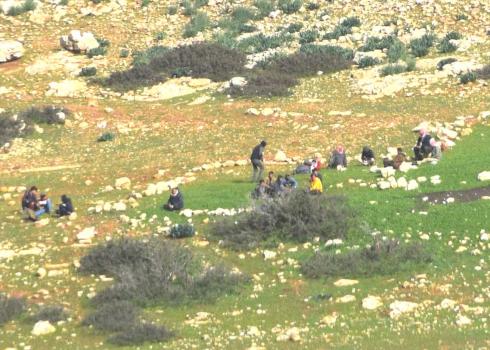
Caption: Some of the families who have left their homes. Photo by 'Aref Dagharmeh, B'Tselem, 13 Jan. 2019
Civil Administration temporarily displaces 13 families from Khirbet Ibziq for the fourth time in one month
Yesterday, Sunday, 13 January 2019, at around 10:00 A.M., Civil Administration personnel arrived with troops, jeeps and tanks at Khirbet Ibziq in the Jordan Valley and ordered 13 families to leave their homes until 6:00 A.M. the next day. The families were forced to walk for more than seven kilometers. This is the fourth temporary displacement pursuant to orders given to the families on 13 December 2018. This particular displacement was scheduled to take place on 31 December 2018, but the Civil Administration told residents it would be postponed the day before. Three days ago, the Civil Administration told residents to report to the Tayasir checkpoint to receive updated orders, claiming mud prevented access to the community. Two days ago, after the residents did not appear, the Civil Administration informed them via the Palestinian DCO that they would have to leave their homes the next day (13 January 2019), to make way for military training.
26 Dec 2018
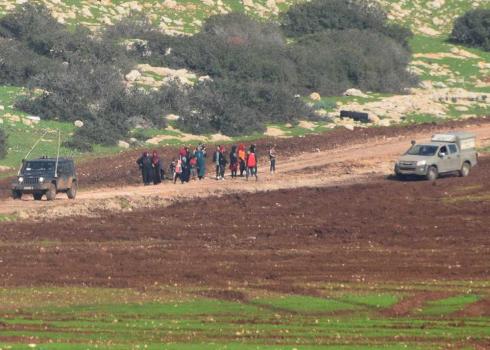
Residents evacuated from Khirbet Ibzik. Photo by 'Aref Daraghmeh, B'Tselem, 26 Dec. 2018
Civil Administration temporariliy displaces 13 families from Khirbet Ibziq for the 3rd time this month
Today, Wednesday, 26 December 2018, at around noon, Civil Administration personnel arrived again with troops, jeeps and tanks at Khirbet Ibziq in the Jordan Valley and ordered 13 families to leave their homes until 6:00 A.M. the next day. The evacuation came after on 13 December 2018, forces gave the families temporary displacement orders for four different dates. The families where forced to walk for more than seven kilometers. While they were away, tanks flattened fields where residents were growing legumes and cereals.
24 Dec 2018
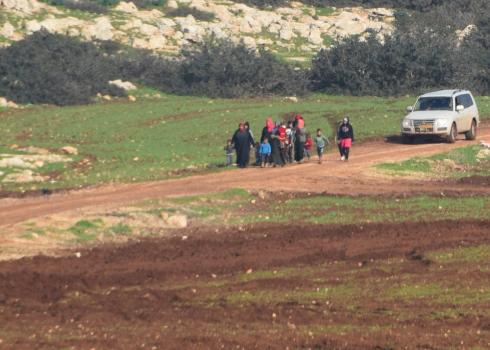
A Civil Administration jeep follows the members of the evacuated families. Photo by 'Aref Daraghmeh, B'Tselem, 23 December 2018
Civil Administration temporarily displaces 13 families from Khirbet Ibziq
Yesterday, Sunday, 23 December 2018, at around noon, Civil Administration personnel arrived with troops, jeeps and tanks at Khirbet Ibziq in the Jordan Valley and ordered 13 families to leave their homes until 6:00 A.M. the next day. The evacuation came after on 13 December 2018, forces gave the families temporary displacement orders for four different dates. The families took some of their flock with them and walked for more than seven kilometers. While they were away, tanks flattened fields where residents were growing legumes and cereals.
Israel’s regime of apartheid and occupation is inextricably bound up in human rights violations. B’Tselem strives to end this regime, as that is the only way forward to a future in which human rights, democracy, liberty and equality are ensured to all people, both Palestinian and Israeli, living between the Jordan River and the Mediterranean Sea.
Since the Hamas attack on 7 October 2023, Israel has acted in a coordinated and deliberate manner to destroy Palestinian society in the Gaza Strip, committing genocide against its residents. In light of Israel’s actions in Gaza, the public statements made by Israeli decision-makers, and the international community’s failure to take effective action, there is a serious risk that the Israeli regime will expand the genocide to other areas under its control—first and foremost, the West Bank.
B’Tselem calls on the Israeli public and the international community to use every tool available under international law to bring an immediate end to Israel’s genocide against the Palestinian people.