Ethnic cleansing of Palestinian communities and lone families in the West Bank (59 communities as of 16 Mar 2026)
Demolitions and confiscations in communities facing expulsion
Thousands of people – residents of dozens of Palestinian communities located throughout Area C, the West Bank – face imminent expulsion by Israeli authorities on a variety of pretexts. The live blog will pool the regular updates we get from B’Tselem field researchers regarding the communities and any attempts by authorities to expel them. Click on the number of a community cluster and then on the tent icon marked on the map for further information about communities facing the risk of expulsion.
The information in the blog reflects the latest state affairs known to us and is updated as we receive new data from the field. For more on the communities facing expulsion, click here.
The information in the blog reflects the latest state affairs known to us and is updated as we receive new data from the field. For more on the communities facing expulsion, click here.
12 Nov 2025
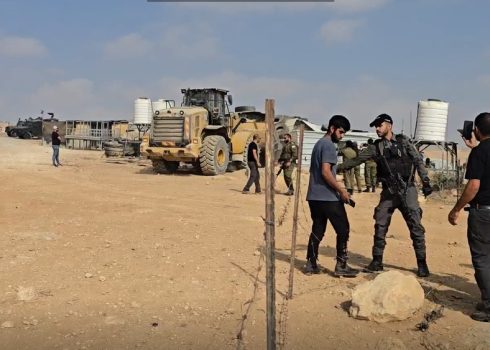
The demolition of the house in Khirbet al-Fakhit. Photo: Nasser Nawaj'ah, B’Tselem
Israel demolished a house and a water cistern in Khirbet al-Fakhit in Masafer Yatta
On Wednesday, 12 November 2025, Civil Administration personnel arrived with a military and Border Police escort and two diggers, at Kh. al-Fakhit, Masafer Yatta, South Hebron Hills. The forces demolished the home of a family of seven, including three minors, an outhouse, and a water cistern.
10 Dec 2024
Khirbet al-Fakhit, Masafer Yatta, South Hebron Hills: Israel demolishes homes, leaving a family of 6, including 5 minors, homeless
On Tuesday, 10 Dec. 2024, Civil Administration personnel came with a military and Border Police escort and two diggers to the community of Khirbet al-Fakhit in the South Hebron Hills. The force demolished two shacks and a tent that were home to a family of six people, five of them minors, leaving the family homeless. The force also demolished the family's outhouse.
20 Aug 2023
Israeli soldiers confiscate three cars from Palestinian residents of Masafer Yatta over three days
On Sunday, 20 August 2023, at around noon, soldiers came to a home in the community of Kh. al-Halawah in Masafer Yatta and confiscated the family’s car, claiming the owners drive workers who have no permits to Israel. A soldier drove the car to a military base near the community of Kh. Jenbah.
On Tuesday, 22 August 2023, around 8:00 P.M., soldiers detained a resident of the community of Kh. Jenbah, who was driving in his car near the community, claiming he was driving in a “closed military zone” and confiscated the car. A soldier drove the car to a military base near the community.
On Thursday, 24 August 2023, at around 4:00 A.M., soldiers detained a resident of the community of Kh. al-Fakhit, who was on his way home, claiming he was driving in a “closed military zone” and confiscated the car. The soldiers instructed the man to drive the car to a base near the community of Kh. Jenbah, which he did.
22 Jun 2022
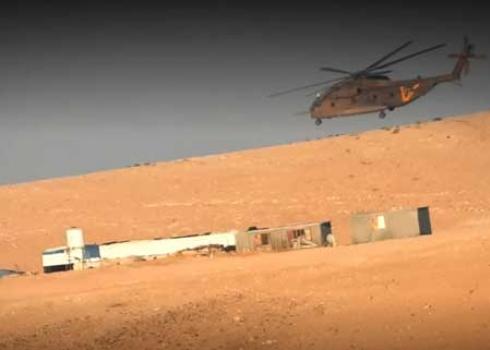
Military helicopter flying over Khirbet al-Maghaz during combat training in Masafer Yatta. Photo by Nasser Nawaj’ah, B’Tselem, 27 June 2022
After High Court greenlights expulsion of Masafer Yatta residents, military announces month of training
After Israel’s High Court of Justice ruled the state can expel some 1,000 Palestinians from their homes in an area it designated “Firing Zone 918” in Masafer Yatta, the South Hebron Hills, the military informed the Palestinian DCO that troops will be training in the area for a month, every Tuesday and Wednesday, from 12:00 to 6:00 P.M.
On the morning of 21 June 2022, the military placed targets around the community of Khirbet al-Maghaz. Some of the targets were placed on a water container, on a tractor wagon and on sheaves of straw.
At around 3:00 P.M., two Merkava tanks approached the community along with an infantry troop. The force advanced slowly, with the tanks emitting blue camouflage smoke and damaging farmland. When it was about 100 to 150 meters from the community, it turned back and left.
On 22 June 2022, at around 12:00 P.M., a military force left a base within Israel’s borders and headed northeast, arriving at an area that lies between the communities of Khirbet al-Markaz and Khirbet Jenbah in Masafer Yatta. Upon arrival, the force, which included tanks and two bulldozers, stayed motionless for some three hours. It then advanced into farmland and entered a harvested wheat field. Community residents heard explosions, apparently caused by shelling from the tanks. The force then advanced east to the outskirts of Khirbet al-Fakhit, where it stopped for about 15 minutes, during which about 20 infantry soldiers trained in the fields with a helicopter flying low above them. The soldiers destroyed part of a wheat field that had not yet been harvested.
Several activists protested the training. Soldiers pushed some of them, knocking them to the ground. Two Israeli activists were detained for about 15 minutes.
1 Jun 2022
Israel demolishes homes of 4 families - 21 people, including 9 minors – and 2 agricultural structures in Masafer Yatta, South Hebron Hills, 1 June 2022
On Wednesday, 1 June 2022, at around 9:00 A.M., Civil Administration personnel arrived with a military and Border Police escort and equipped with two bulldozers at Khirbet al-Fakhit in Masafer Yatta. The forces demolished the homes of two families numbering 13 people in total, including seven minors, and two storage sheds for fodder and farming equipment, which were all rebuilt after being demolished by the Civil Administration on 11 May 2022.
From there, the forces continued to Khirbet al-Markaz in Masafer Yatta, where they demolished the homes of two families numbering eight people in total, including two minors, which were also rebuilt after being demolished by the by the Civil Administration on 11 May 2022.
On 4 May 2021, Israel’s High Court of Justice approved the forcible transfer of more than 1,000 residents of the Masafer Yatta area after the military declared their area of residence as “Firing Zone 918.”
11 May 2022
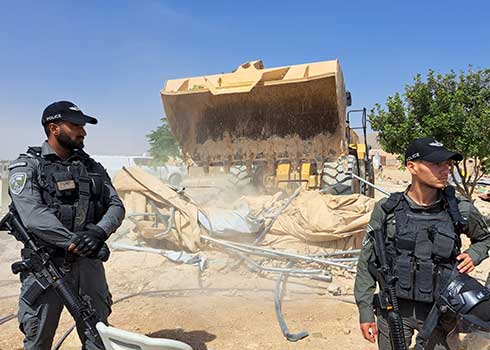
Israel demolishes homes of 8 families – 47 people, including 19 minors – and 4 agricultural structures in South Hebron Hills after High Court approves expulsion of more than 1,000 area residents
On Wednesday morning, 11 May 22, Civil Administration personnel arrived with a military and Border Police escort and equipped with two bulldozers at the village of a-Tuwani in the Safa Yatta area, where they demolished a house under construction intended for a family of nine, including seven minors.
The forces then continued to Khirbet al-Fakhit in Masafer Yatta and demolished six structures the residents had rebuilt after the Civil Administration demolished them in January: the homes of three families numbering 24 people in total, including 15 minors, as well as two livestock enclosures and a storage shed.
After that, the forces continued to Khirbet al-Markez, also in Masafer Yatta, where they demolished five structures: the homes of four families from one extended family, numbering 14 people in total, including four minors, as well as a livestock enclosure.
On 4 May 22, Israel’s High Court of Justice approved the forcible transfer of more than 1,000 residents of Masafer Yatta whose area of residence was declared “Firing Zone 918” by the military.
15 Feb 2022
Israel demolishes house under construction, cistern and agricultural shack in the South Hebron Hills
On Tuesday, 15 February 2022, at around 7:00 A.M., Civil Administration personnel came with a military and Border Police escort and a bulldozer to the community of Khirbet al-Fakhit in Masafer Yatta, South Hebron Hills. The forced demolished an agricultural shack belonging to one of the community’s families for the second time.
From there, the forces continued north to the village of Khallet al-Mayah, where they demolished a house under construction intended to house a family of six, including four minors, as well as the family’s cistern.
During the incident, the homeowner came to the scene, and a confrontation ensued between him and the security forces, who knocked him to the ground, and one leaned his knee on his stomach. The forces then tied his hands and feet, grabbed them, picked him up, put him in a jeep and took him to the police station in Kiryat Arba. At the station, he was questioned on suspicion of assaulting members of the security forces and was released that night on a NIS 1,000 bail.
12 Jan 2022
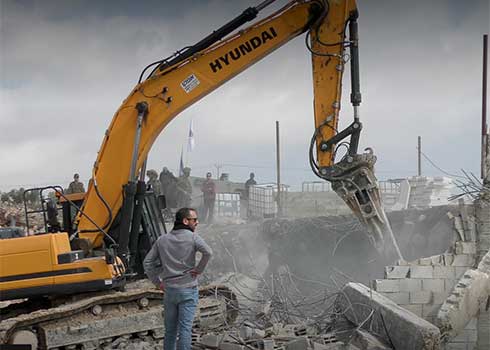
Israel demolishes the homes of three families in Khirbet al-Fakhit, Masafer Yatta, leaving 18 people homeless in efforts to expel area residents
On Wednesday, 12 January 2021, at around 9:00 A.M., Civil Administration personnel came with a military and Border Police escort and equipped with bulldozers to the Palestinian community of Khirbet al-Fakhit in Masafer Yatta, South Hebron Hills. The forces demolished nine structures, including three housing units inhabited by three families from the same extended family, leaving 18 people, including 11 minors, homeless. The demolition was carried out by the power of demolition orders delivered on 21 February 2016. The other demolished structures, belonging to the same family, included three livestock enclosures, a livestock pen, a kitchen, and fodder storage and a cistern on the family’s land.
Khirbet al-Fakhit is one of the Masafer Yatta communities whose area of residence was declared “Firing Zone 918” by the military in the 1980s as part of Israel’s efforts to expel them. Twenty-two families live in the community, numbering 180 people. Most community structures face immediate risk of demolition after the families have been issued demolition orders. Although the area was declared a "firing zone," community residents tried to obtain permits for their homes retroactively. To that end, they even submitted an outline plan that could have allowed it if approved. These attempts, which were hopeless from the outset, failed after the Civil Administration Planning Committee, the Israeli District Court and the High Court of Justice rejected their requests. In early January, HCJ judges rejected the residents' last petition, and now the Civil Administration has begun enforcing the demolition orders.
Filmed by Basil al-Adraa, Eid Hazalin and Itai Feitelson
25 Oct 2021
A month after the settler attack: Israel confiscates tent in al-Mufaqarah and destroys dirt road and main pipeline of Masafer Yatta communities in South Hebron Hills
In the morning hours of Monday, 25 October 2021, Civil Administration officials accompanied by soldiers and Border Police officers, and equipped with bulldozers, arrived at the community of al-Mufaqarah in Masafer Yatta. The forces confiscated a tent set up by community residents to host people visiting the area as a show of solidarity following the settler attack on 28 September 2021.
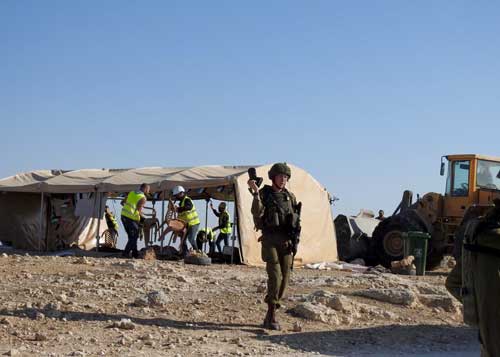
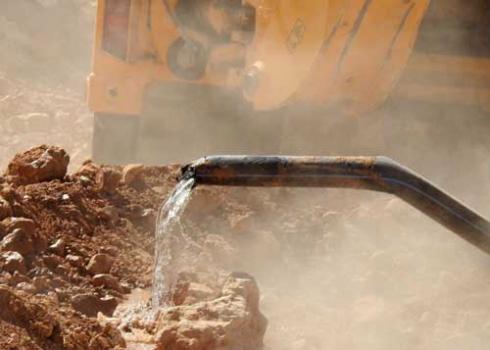
From there, the forces continued south and destroyed a dirt road leading from the community of Khirbet Khilet a-Dabe’ to the community of al-Fakhit. They also destroyed the main water line that ran alongside it, which serves most of the communities in Masafer Yatta.
The acts of destruction yesterday, as well as the settler attack on al-Mufaqarah, are part of the state’s attempt to expel the residents of Masafer Yatta from their place of residence. As part of these attempts, the state forbids them to legally build their homes or connect to water and power grids, restricts their grazing land, and enables acts of settler violence in order to make their lives so unbearable that they will leave of their own volition (Video Filmed by ‘Eid Hazalin and Itai Feitelson).
11 Aug 2021
Israel demolishes family home and agricultural structures in South Hebron Hills
Today, Wednesday, 11 August 2021, at around 7:30 A.M., Civil Administration personnel came with a military and Border Police escort, a bulldozer and digger to the community of Khirbet Khallet a-Dabe’ in Masafer Yatta, an area in the South Hebron Hills. The forces demolished a cistern used by area farmers to irrigate crops.
From there, the forces continued southeast to Khirbet al-Fakhit, where they demolished a livestock enclosure and an agricultural shack. The forces then returned to Khirbet Khallet a-Dabe’ and demolished a tin-roofed cement structure that housed a family of 11, including 5 minors.
The forces then continued to the Za’atut area, east of the village of al-Buweib, where they destroyed a cement fence erected by the residents around a farm under construction, as well as a tent used by the workers and two cisterns.
23 Jun 2021
The military destroyed a dirt road that connected Yatta to Masafer Yatta, and a water line that served dozens of families in the area
On 23 June 2021, at around 6:00 AM, soldiers came with a bulldozer to the Masafer Yatta area in the South Hebron Hills, and dug ditches in several parts of a 2 k”m long dirt road that connects Masafer Yatta to the town Yatta and to the surrounding villages. In addition, the security forces destroyed a water line that served around 12 communities in the area, leaving dozens of families without water supply.
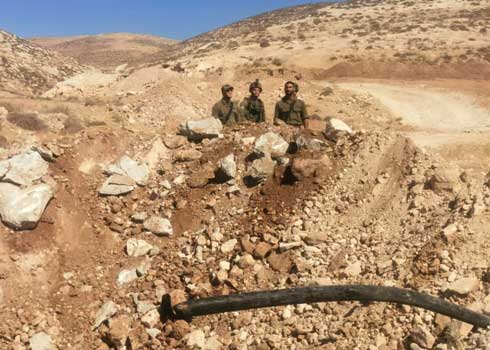
On 9 June 2021, the military destroyed roads and a water line that served 15 families in Masafer Yatta.
The military repeatedly blocks roads and destroys water supply infrastructure in this area, as part of the authorities’ routine harassment of Palestinian communities in the South Hebron Hills, particularly in Masafer Yatta, in its bid to expel them from their homes and from the area in which they reside.
9 Jun 2021
Israeli military again destroys roads to Masafer Yatta communities and water pipe serving one
On Wednesday, 9 June 2021, at around 8:00 A.M., soldiers came with a D9 bulldozer to the Masafer Yatta area in the South Hebron Hills. The forces destroyed a 500-meter-long section of road leading to the community of She’b al-Batum, some of which was paved with concrete, as well as a 500-meter-long dirt road leading to Khirbet al-Mufaqarah. They also destroyed a water pipe that serves the community of al-Fakhit, where 15 families live, which the residents later repaired.
The military has blocked the roads leading to She’b al-Batum several times, the last of which was in March 2020, but the residents removed the roadblocks. Blocking roads and destroying pipelines is part of Israel’s routine harassment of Palestinian communities in the South Hebron Hills, and in Masafer Yatta in particular, in its bid to expel them from the area and from their homes.
Israel’s regime of apartheid and occupation is inextricably bound up in human rights violations. B’Tselem strives to end this regime, as that is the only way forward to a future in which human rights, democracy, liberty and equality are ensured to all people, both Palestinian and Israeli, living between the Jordan River and the Mediterranean Sea.
Since the Hamas attack on 7 October 2023, Israel has acted in a coordinated and deliberate manner to destroy Palestinian society in the Gaza Strip, committing genocide against its residents. In light of Israel’s actions in Gaza, the public statements made by Israeli decision-makers, and the international community’s failure to take effective action, there is a serious risk that the Israeli regime will expand the genocide to other areas under its control—first and foremost, the West Bank.
B’Tselem calls on the Israeli public and the international community to use every tool available under international law to bring an immediate end to Israel’s genocide against the Palestinian people.